Unpacking the Skepticism: Why Hacker News Users Are Anti-AI
Despite AI's rapid growth, Hacker News users exhibit skepticism. This article delves into their concerns and the implications for developers and startups.
Introduction
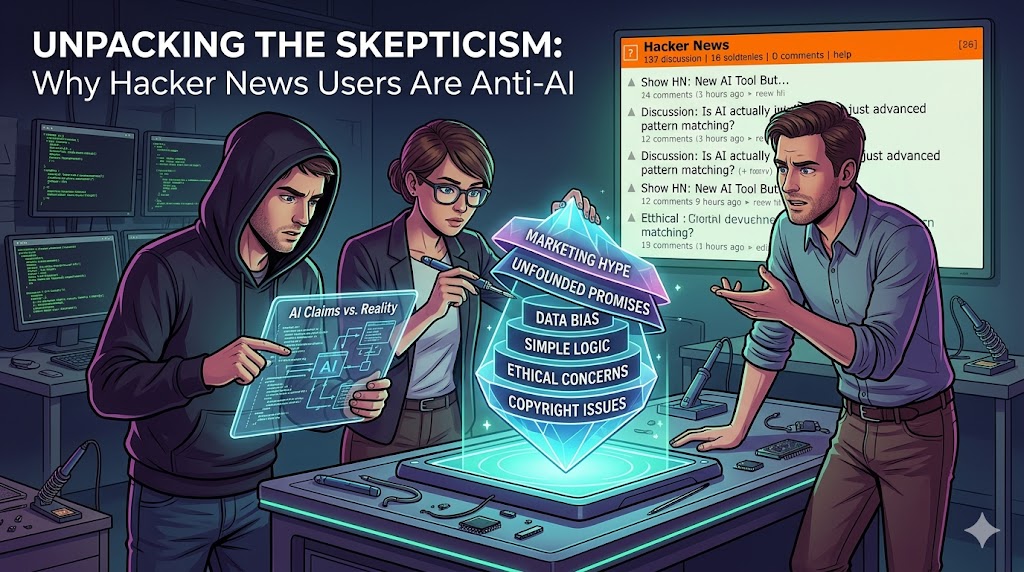
In recent times, the Hacker News community has voiced a growing skepticism towards artificial intelligence (AI). As a platform that thrives on innovation and technical discussion, this sentiment raises questions about the future of AI in technology. What lies at the heart of this skepticism? In this article, we will explore the reasons behind the anti-AI sentiment within Hacker News and its implications for developers and startups.
The Hacker News Community: A Brief Overview
Hacker News (HN) is a social news website focusing primarily on computer science and entrepreneurship. Founded by Paul Graham and operated by Y Combinator, it has become a haven for tech enthusiasts, developers, and startup founders. The community is known for its critical thinking, rigorous debate, and a healthy dose of skepticism towards trends in technology.
Characteristics of the HN Crowd
- Tech-savvy: Predominantly made up of developers, entrepreneurs, and tech professionals.
- Critical thinkers: Engaged discussions often highlight both the benefits and drawbacks of new technologies.
- Ethically minded: Many users are concerned about the societal implications of technological advancements.
The Anti-AI Sentiment: Key Concerns
While AI promises numerous benefits, including automation and enhanced decision-making, several concerns have been raised within the HN community. Here are some of the key reasons for the anti-AI sentiment:
1. Ethical Implications
The ethical concerns surrounding AI are at the forefront of many discussions. Issues such as bias in algorithms, data privacy, and the potential for job displacement are of significant concern.
- Bias in AI: Algorithms trained on historical data can perpetuate existing biases, leading to unfair outcomes.
- Job Displacement: Automation poses a threat to various jobs, particularly in sectors like manufacturing and customer service.
2. Misinformation and Overhype
Many in the HN community feel that the mainstream media often overhypes AI capabilities, creating unrealistic expectations. This can lead to disillusionment when the technology fails to deliver on its promises.
3. Loss of Human Touch
As AI becomes more integrated into everyday life, there is a growing concern about the loss of human interaction. From customer service chatbots to AI-driven content creation, the fear is that technology may replace the personal touch that is essential in many industries.
4. Security Risks
AI systems can be vulnerable to attacks. The potential for misuse of AI technologies—be it for malicious purposes or in the form of deepfakes—adds another layer of concern for many HN users.
5. Philosophical Questions
The philosophical implications of creating autonomous systems that can make decisions raise fundamental questions about morality and responsibility. Who is to blame when an AI makes a mistake? This uncertainty fuels skepticism among the community.
The Implications for Developers and Startups
Understanding the anti-AI sentiment on Hacker News is crucial for developers and startup founders. Here are some practical takeaways for navigating this landscape:
1. Prioritize Ethical AI Development
- Bias Mitigation: Actively work on bias detection and mitigation strategies in your AI models.
- Transparency: Be transparent about how your AI systems work and the data they use to build trust with users.
2. Set Realistic Expectations
- Manage Hype: Avoid over-promising capabilities. Clearly communicate what your AI can and cannot do.
- Educate Users: Provide resources that educate users about AI's limitations and potential use cases.
3. Maintain the Human Element
- Hybrid Solutions: Consider solutions that combine AI efficiency with human oversight to ensure a personalized experience.
- User Feedback: Actively seek feedback from users to improve AI interactions and maintain a human touch.
4. Address Security Concerns
- Robust Security Measures: Incorporate strong security protocols to protect your AI systems from exploitation.
- Ethical Guidelines: Adhere to ethical guidelines for AI deployment to mitigate risks associated with misuse.
Comparison Table: Key Concerns vs. Solutions
| Key Concerns | Proposed Solutions |
|---|---|
| Ethical Implications | Prioritize ethical AI development |
| Misinformation and Overhype | Set realistic expectations |
| Loss of Human Touch | Maintain the human element |
| Security Risks | Address security concerns |
| Philosophical Questions | Engage in open discussions |
FAQ
Q: Why is there skepticism towards AI?
A: Skepticism stems from ethical concerns, misinformation, job displacement fears, and the potential loss of human touch in various sectors.
Q: How can developers address these concerns?
A: By prioritizing ethical development, setting realistic expectations, and maintaining a human element, developers can mitigate skepticism.
Q: Is AI completely unreliable?
A: No, AI has significant potential, but its limitations and ethical implications must be acknowledged and addressed.
Q: What role does transparency play in AI?
A: Transparency fosters trust among users and encourages responsible usage of AI technologies.
Q: How can I contribute to ethical AI development?
A: Engage in discussions, advocate for responsible practices, and educate yourself and others about AI ethics.
Bottom Line
The anti-AI sentiment within the Hacker News community reflects broader societal concerns about technology's implications. For developers and startups, acknowledging these concerns is crucial for building trust and credibility. By prioritizing ethical practices, setting realistic expectations, and maintaining a human connection, we can shape a future where AI and humanity coexist harmoniously.