The Ultimate Guide to App Store Optimization (ASO) for Developers
Unlock the secrets of App Store Optimization (ASO) to enhance your app's visibility and boost downloads. This comprehensive guide covers all you need to know.
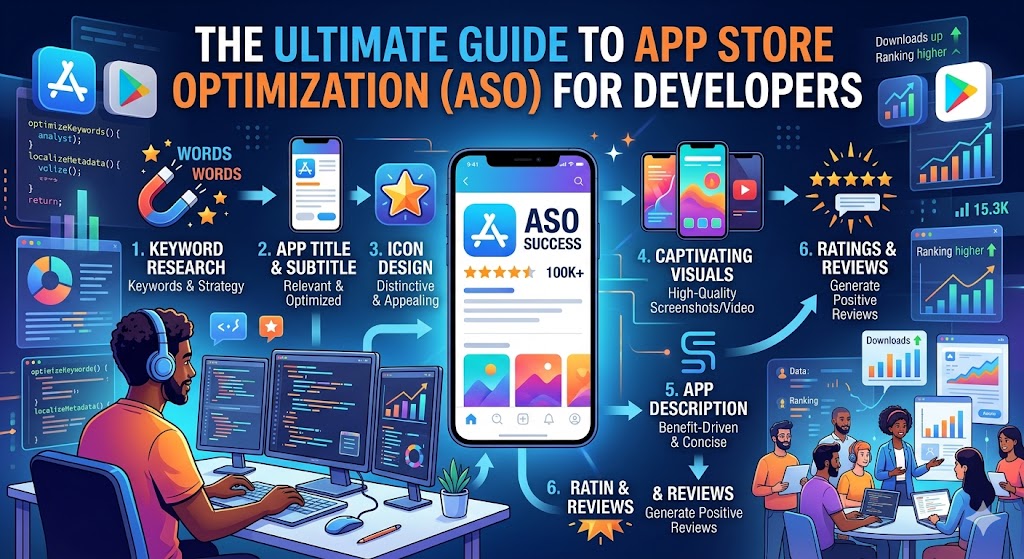
Understanding App Store Optimization (ASO)
App Store Optimization (ASO) is the process of improving the visibility of a mobile app in app stores such as the Apple App Store and Google Play Store. The primary goal of ASO is to increase app downloads and boost organic traffic. Given that millions of apps compete for attention, effective ASO can significantly impact an app’s success.
Why ASO Matters
- Increased Visibility: With ASO, your app can rank higher in search results and top charts, leading to increased visibility.
- Higher Conversion Rates: Optimizing your app's metadata can lead to higher conversion rates from views to downloads.
- Cost-Effective Marketing: Unlike paid ads, ASO focuses on organic growth and can be more sustainable over time.
Key Components of ASO
ASO encompasses several elements, each contributing to the overall visibility and appeal of your app. Here are the key components:
1. Keyword Optimization
Choosing the right keywords is critical for app discoverability. Effective keyword optimization involves:
- Researching Competitors: Analyze the keywords used by competing apps in your niche.
- Utilizing Tools: Use ASO tools to find relevant and high-traffic keywords.
- Incorporating Keywords: Include keywords in your app's title, subtitle, and description to enhance visibility.
2. App Title and Description
Your app’s title and description are crucial for both users and app store algorithms. Tips include:
- Title: Keep it concise, descriptive, and include primary keywords.
- Description: Use a compelling, clear description that highlights the app's value proposition and includes secondary keywords naturally.
3. Visual Assets
Visual elements such as app icons, screenshots, and promotional videos play a significant role in user engagement.
- App Icon: A unique and visually appealing icon can attract users.
- Screenshots: Use high-quality screenshots that demonstrate the app's features and benefits.
- Promotional Video: A short video can provide a quick overview of your app, capturing users' attention.
4. Ratings and Reviews
Positive ratings and reviews enhance credibility and influence download decisions. Strategies include:
- Encouraging Reviews: Prompt satisfied users to leave positive reviews.
- Responding to Feedback: Engage with users who leave feedback, both positive and negative, to show responsiveness and build community.
5. Localization
Localizing your app for different regions can significantly improve its reach. Considerations include:
- Translating Metadata: Adapt your app's title, description, and keywords to different languages.
- Cultural Relevance: Ensure the app's content is culturally appropriate for the target audience.
ASO Best Practices
To achieve effective ASO, consider the following best practices:
- Regular Updates: Keep your app updated with new features and improvements, and update your app store metadata accordingly.
- Competitive Analysis: Continuously analyze competitors' ASO strategies and adapt your approach.
- A/B Testing: Experiment with different app icons, descriptions, and keywords to find what resonates best with users.
ASO Tools and Resources
Several tools can aid in your ASO efforts:
| Tool | Features | Best For |
|---|---|---|
| App Annie | Market insights, keyword tracking | Competitive analysis |
| Sensor Tower | ASO research, app analytics | Comprehensive ASO strategy |
| Mobile Action | Keyword tracking, competitor insights | Performance tracking |
| ScreenMint | Automated screenshot generation, ASO metadata optimization | Streamlining app publishing |
The Future of ASO
As app stores evolve, so does the landscape of ASO. Here are some trends to watch:
- AI and Machine Learning: These technologies will likely play a larger role in understanding user behavior and optimizing app visibility.
- Voice Search Optimization: As voice search becomes more prevalent, optimizing for voice queries may become essential.
- User Engagement Metrics: App stores may begin to place more emphasis on user engagement metrics, such as session length and retention rates, in ranking algorithms.
FAQ
What is ASO?
ASO, or App Store Optimization, is the practice of improving the visibility and ranking of mobile apps in app stores to increase downloads and user engagement.
How long does it take to see results from ASO?
Results from ASO efforts can vary, but significant changes in rankings and downloads may typically be observed within a few weeks to a few months.
Can I do ASO without a budget?
Yes, many ASO strategies, such as keyword optimization and reviewing competitor apps, can be implemented without a financial investment.
What is the difference between ASO and SEO?
While both ASO and SEO aim to improve visibility, ASO focuses on app stores, whereas SEO focuses on search engines. They require different strategies and techniques tailored to their platforms.
Do I need to continuously optimize my app?
Absolutely. Continuous optimization is crucial as app store algorithms and user preferences evolve over time. Regular updates and A/B testing can help keep your app relevant.
Bottom Line
App Store Optimization is an essential strategy for any developer looking to maximize their app's potential. By focusing on keyword optimization, crafting compelling descriptions, utilizing visual assets, and engaging with users, you can significantly enhance your app's visibility and download rates. As the app landscape continues to evolve, staying informed and agile in your ASO strategies will give your app the best chance of success. Tools like ScreenMint can streamline your ASO efforts, making it easier to manage and optimize your app's assets for peak performance.