Sysadmining in 2023: Lessons from 2009
Discover how revisiting sysadmin practices from 2009 can enhance today's IT strategies, focusing on efficiency and resilience in a rapidly changing tech landscape.
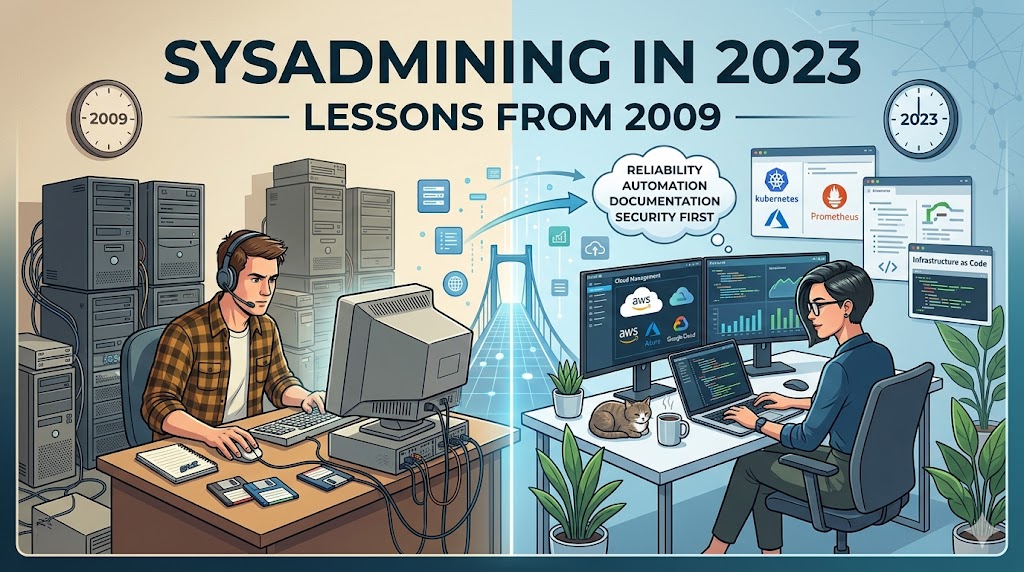
Introduction
As the tech landscape continues to evolve, sysadmins face a myriad of challenges that demand both agility and resilience. While the tools and technologies have undoubtedly advanced since 2009, some of the core principles of system administration remain timeless. In this article, we will explore how revisiting those practices can enhance today’s IT strategies, particularly in a world increasingly dominated by cloud infrastructure and automation.
The Context of 2009 in Sysadmining
Back in 2009, the technological ecosystem was quite different. Virtualization was gaining traction, cloud computing was still in its infancy, and many systems were managed with a hands-on, physical approach. Key practices included:
- On-Premises Infrastructure: Most organizations relied heavily on physical servers.
- Manual Configuration: Sysadmins often performed configurations manually, leading to an intimate understanding of their environments.
- Documentation: Comprehensive documentation was crucial for managing systems effectively.
Though the tools have changed, many foundational concepts from that time can still be applied today.
Simplicity Over Complexity
One of the most profound lessons from 2009 is the value of simplicity. Modern technology often tempts teams to adopt complex solutions that can obscure understanding and hinder troubleshooting. Here are some strategies that embrace simplicity:
- Minimalist Toolsets: Limit the number of tools you use for system management. This reduces complexity and improves team efficiency.
- Clear Configurations: Use straightforward configurations in your scripts and automation tools to enhance readability and maintainability.
Advantages of Simplicity
- Faster Troubleshooting: Fewer tools mean fewer points of failure.
- Easier Onboarding: New team members can understand systems faster when complexity is minimized.
The Importance of Monitoring
In 2009, monitoring was primarily about keeping an eye on server metrics and logs. Fast forward to today, and while the tools have advanced, the principle remains the same. Proactive monitoring can prevent issues before they escalate. Consider these monitoring strategies:
- Centralized Logging: Use centralized logging systems to aggregate logs from various services and servers.
- Alerting Systems: Implement alerting mechanisms to notify the team of anomalies, not just failures.
Key Metrics to Monitor
- CPU and Memory Usage
- Disk I/O Rates
- Network Latency
Documentation: The Unsung Hero
In 2009, documentation was often a tedious task, but its importance cannot be overstated. Today, comprehensive documentation is essential for knowledge transfer and operational continuity. Here’s how to improve your documentation practices:
- Version Control: Use version control systems like Git for documentation, ensuring that changes are tracked and history is preserved.
- Living Documents: Keep documentation up to date with regular reviews and updates to reflect changes in systems and processes.
Benefits of Good Documentation
- Knowledge Retention: Ensures that critical information isn’t lost when team members leave.
- Consistency in Operations: A well-documented process leads to fewer errors and improved reliability.
Automation: A Double-Edged Sword
While automation has transformed sysadmining, it’s crucial to approach it with caution. In 2009, automation was often limited to scripts and cron jobs. Today, it encompasses a wide array of tools and platforms. Here are some best practices:
- Start Small: Begin with automating simple, repetitive tasks and gradually expand.
- Test Rigorously: Always test automation scripts in a staging environment before deploying them in production to avoid catastrophic failures.
A Comparison: 2009 vs. 2023
| Practice | 2009 Approach | 2023 Approach |
|---|---|---|
| Infrastructure | On-premises servers | Hybrid cloud environments |
| Configuration | Manual, hands-on | Automated scripts and tools |
| Monitoring | Basic metrics | Advanced analytics and APM |
| Documentation | Static documents | Dynamic, version-controlled docs |
| Automation | Basic scripts | CI/CD pipelines and orchestration |
Embracing the Future with a Nod to the Past
While the tools and technologies of sysadmining have evolved, the underlying principles from 2009 can guide modern IT practices. By simplifying processes, maintaining effective monitoring, prioritizing documentation, and approaching automation thoughtfully, sysadmins can navigate today’s complexities more effectively.
FAQs
What are the key takeaways from sysadmining in 2009?
The core principles include simplicity, proactive monitoring, thorough documentation, and cautious automation. These practices enhance efficiency and reliability.
How can simplicity improve sysadmin practices today?
Simplicity reduces complexity, accelerates troubleshooting, and makes onboarding easier, allowing teams to focus on strategic tasks.
Why is documentation still important in modern IT?
Documentation ensures knowledge retention, operational consistency, and smoother transitions during team changes or system upgrades.
What monitoring tools are recommended for modern sysadmins?
Consider centralized logging systems and alerting platforms that provide real-time insights into system performance and anomalies.
How should automation be approached in sysadmining?
Start with small, manageable tasks, and always test automation scripts thoroughly to prevent issues in production environments.
Bottom Line
Reflecting on the practices from 2009 provides valuable insights that can improve today’s sysadmin strategies. By integrating timeless principles with modern technology, sysadmins can build more resilient and efficient infrastructures. As we continue to innovate, let’s not forget the foundational practices that have guided us thus far.