Sam Altman's Shift on AI Job Displacement: What Changed?
Sam Altman, CEO of OpenAI, has revised his views on AI's impact on job displacement. Explore the factors influencing this shift and what it means for the future.
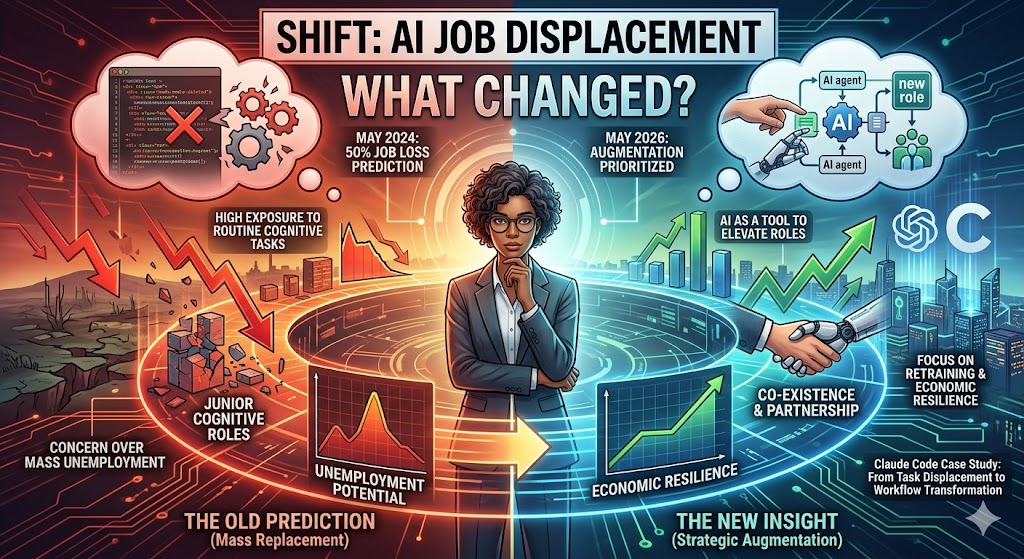
Sam Altman's Shift on AI Job Displacement: What Changed?
Introduction
The conversation surrounding artificial intelligence and its impact on employment has evolved significantly over the years. Sam Altman, the CEO of OpenAI, initially warned of a potential "jobs apocalypse," where AI would render many jobs obsolete. However, in recent discussions, he has expressed a more nuanced and optimistic perspective. This shift raises important questions for developers, startup founders, and indie hackers about how to navigate the rapidly changing landscape of work influenced by AI technologies.
The Initial Concern: Jobs Apocalypse
Altman’s early predictions about AI were grounded in the fear that automation would lead to widespread job loss. He outlined several key concerns:
- Massive Job Displacement: Many roles, particularly in manufacturing and repetitive tasks, were at risk of being automated.
- Skill Gap: Workers might lack the necessary skills to transition into new roles created by the AI industry.
- Economic Inequality: Job losses could exacerbate societal divides, leading to increased unemployment rates and economic disparity.
This perspective resonated with many, as the fear of machines taking over jobs is a common narrative in discussions about AI. However, as AI technologies have advanced, so too have the conversations surrounding their implications.
What Changed? A Shift in Perspective
Recently, Altman has moderated his views on the impact of AI on employment. Here are several factors that contributed to this change:
1. AI as a Complementary Tool
Instead of viewing AI solely as a replacement for human labor, Altman now emphasizes its role as a complementary tool that enhances productivity. Key points include:
- Augmentation of Jobs: AI can assist workers in tasks that require creativity, strategy, and complex decision-making, allowing them to focus on higher-level functions.
- Creation of New Roles: The rise of AI technologies has led to the emergence of new job categories, such as AI ethics managers, data scientists, and machine learning engineers.
2. Reskilling and Upskilling Opportunities
The emphasis on training and education has grown significantly. Altman notes that:
- Investment in Education: Companies are increasingly investing in employee training programs to help workers adapt to new technologies.
- Community Initiatives: Many organizations and governments are developing initiatives aimed at reskilling displaced workers, creating pathways to new employment opportunities.
3. Economic Growth through Innovation
Altman argues that AI has the potential to drive significant economic growth. Some considerations include:
- Increased Efficiency: AI can improve efficiency across industries, leading to cost savings and increased profits, which can, in turn, drive job creation.
- Innovation Hubs: Startups and tech companies are leveraging AI to develop innovative solutions, fostering a vibrant ecosystem that can create numerous job opportunities.
The Broader Implications for Developers and Startups
For developers, startup founders, and indie hackers, understanding Altman's revised perspective on AI's role in the workforce is crucial. Here are some practical takeaways:
- Embrace AI Tools: By integrating AI into your projects, you can enhance productivity and create more innovative solutions. Tools like ScreenMint can automate time-consuming tasks such as generating App Store screenshots and ASO metadata, allowing you to focus on core development activities.
- Focus on Collaboration: Position your applications as tools that assist users rather than replace them. This approach can foster user loyalty and engagement.
- Invest in Learning: Stay updated on AI trends and consider investing in your own skills or those of your team to remain competitive in an evolving job market.
Comparison Table: Old vs. New Perspectives on AI and Jobs
| Aspect | Old Perspective (Jobs Apocalypse) | New Perspective (AI as Complement) |
|---|---|---|
| Job Loss | Widespread displacement expected | Augmentation of roles anticipated |
| Skill Gap | Lack of necessary skills | Emphasis on reskilling and upskilling |
| Economic Impact | Increased inequality | Economic growth through innovation |
| Job Creation | Few new roles expected | New roles and industries emerging |
FAQ
Q1: What are the main reasons for Sam Altman's change of heart regarding AI and job displacement?
A1: Altman now sees AI as a complement to human work rather than a replacement, emphasizing the potential for job creation and the importance of reskilling.
Q2: How can developers leverage AI in their projects?
A2: Developers can integrate AI tools to enhance productivity, automate tasks, and create innovative solutions that address user needs.
Q3: What role does education play in adapting to AI advancements?
A3: Education is crucial for reskilling workers, enabling them to transition into new roles created by AI technologies.
Q4: Are there any specific examples of new job roles created by AI?
A4: Yes, roles such as AI ethics managers, data scientists, and machine learning engineers are emerging as AI technologies develop.
Q5: What should startups focus on to thrive in an AI-driven economy?
A5: Startups should focus on integrating AI into their solutions, investing in team skills, and fostering a culture of innovation.
Bottom Line
Sam Altman's shift from a pessimistic view of AI's impact on jobs to a more optimistic perspective reflects the evolving nature of technology and its integration into the workforce. For developers and startup founders, this presents both challenges and opportunities. By embracing AI as a collaborative tool and investing in skills and innovation, you can position yourself for success in an AI-enhanced job landscape.