Operationalizing AI Workflows: Insights from OpenAI's Lee Spacagna
Unlock the secrets of operationalizing AI workflows with insights from OpenAI's Lee Spacagna, tailored for developers and startup founders.
Introduction
The rapid advancement of artificial intelligence brings both opportunities and challenges for startups and developers. As AI technologies become more accessible, the focus has shifted toward operationalizing these innovations into effective workflows. OpenAI's Lee Spacagna offers invaluable insights into this process, emphasizing the importance of strategy and execution.
Understanding AI Workflows
What Are AI Workflows?
AI workflows refer to the structured processes through which AI technologies are integrated into existing systems, enabling organizations to automate tasks, analyze data, and derive actionable insights. The ability to operationalize these workflows can significantly enhance efficiency, reduce costs, and drive innovation.
Key Components of AI Workflows
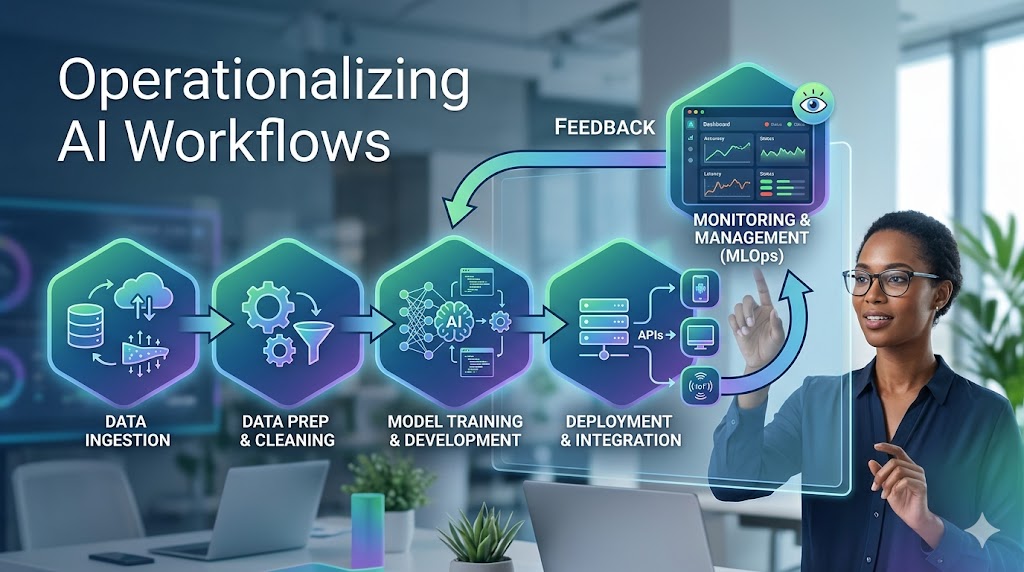
- Data Management: Proper data handling and organization are essential for effective AI workflows. This includes data collection, cleaning, and storage.
- Model Development: Building and training AI models tailored to specific business needs.
- Deployment: Integrating AI models into production systems to deliver real-time insights and automation.
- Monitoring and Maintenance: Continuous evaluation of AI performance to ensure alignment with business goals.
Operationalizing AI Workflows: Strategies from Lee Spacagna
Lee Spacagna emphasizes a systematic approach to operationalizing AI workflows. Here are some key strategies:
1. Start with Clear Objectives
Defining what success looks like is crucial. Organizations should establish clear objectives that align AI initiatives with business goals. This clarity will guide the development and implementation of AI workflows.
2. Foster a Collaborative Environment
Creating a culture that encourages collaboration between data scientists, developers, and business stakeholders can lead to more effective AI solutions. Cross-functional teams can leverage diverse skill sets to tackle complex challenges.
3. Leverage Existing Frameworks
Rather than building AI systems from scratch, startups can benefit from leveraging existing frameworks and tools. OpenAI’s models, for example, can be integrated into various applications, allowing developers to focus on customization and deployment.
4. Prioritize Iterative Development
Adopting an agile approach enables teams to iterate quickly based on feedback and performance metrics. This flexibility allows for adjustments in real-time, enhancing the overall effectiveness of AI workflows.
5. Invest in Training and Skill Development
As AI technologies evolve, ongoing training for team members is essential. Providing resources and opportunities for skill development can empower teams to stay ahead in the competitive landscape.
Challenges in Operationalizing AI Workflows
While operationalizing AI workflows presents numerous benefits, it is not without challenges. Here are some common hurdles:
- Data Quality: Poor data quality can lead to inaccurate models and ineffective outcomes.
- Integration Issues: Merging AI systems with legacy infrastructure can be complex and time-consuming.
- Regulatory Compliance: Navigating compliance with data protection regulations can be daunting for startups.
- Resource Constraints: Limited budgets and personnel can hinder the ability to fully implement AI workflows.
Comparative Analysis: Traditional vs. AI-Driven Workflows
| Feature | Traditional Workflows | AI-Driven Workflows |
|---|---|---|
| Data Handling | Manual data entry and processing | Automated data collection and analysis |
| Decision-Making | Rule-based decisions | Data-driven, adaptive decisions |
| Scalability | Limited scalability | Highly scalable with cloud technologies |
| Maintenance | Periodic reviews and updates | Continuous monitoring and improvement |
| Collaboration | Siloed departments | Cross-functional teams |
Practical Takeaways for Startups
- Define Clear Objectives: Before diving into AI, ensure you know what you aim to achieve.
- Build a Collaborative Culture: Encourage communication between technical and non-technical teams.
- Utilize Existing Tools: Leverage platforms like ScreenMint for streamlined processes in metadata and asset generation.
- Be Agile: Embrace an iterative approach to AI development, allowing for real-time adjustments.
FAQ
What is the role of data in AI workflows?
Data is the backbone of AI workflows; its quality and management directly impact the effectiveness of AI models.
How can startups integrate AI into their existing systems?
Startups can leverage existing frameworks, like those offered by OpenAI, to integrate AI seamlessly without starting from scratch.
What skills are essential for operationalizing AI workflows?
Key skills include data analysis, software development, project management, and a basic understanding of AI technologies.
How can companies overcome resource constraints when implementing AI?
Focusing on partnerships, leveraging cloud solutions, and prioritizing essential AI initiatives can help overcome these challenges.
What are the common pitfalls to avoid when operationalizing AI?
Avoiding vague objectives, neglecting data quality, and underestimating the need for ongoing maintenance are critical pitfalls to steer clear of.
Bottom Line
Operationalizing AI workflows is not just about technology; it's about strategy, collaboration, and continuous improvement. By following the insights shared by Lee Spacagna, startups can effectively harness AI’s potential, streamline their operations, and ultimately enhance their competitive edge. Embrace these strategies to navigate the complexities of AI implementation successfully.