Exploring Nvidia Cosmos 3: The Future of Physical AI Reasoning
Nvidia Cosmos 3 offers a groundbreaking platform for physical AI reasoning and action models, empowering developers to create smarter applications. Dive into its capabilities and potential.
Introduction
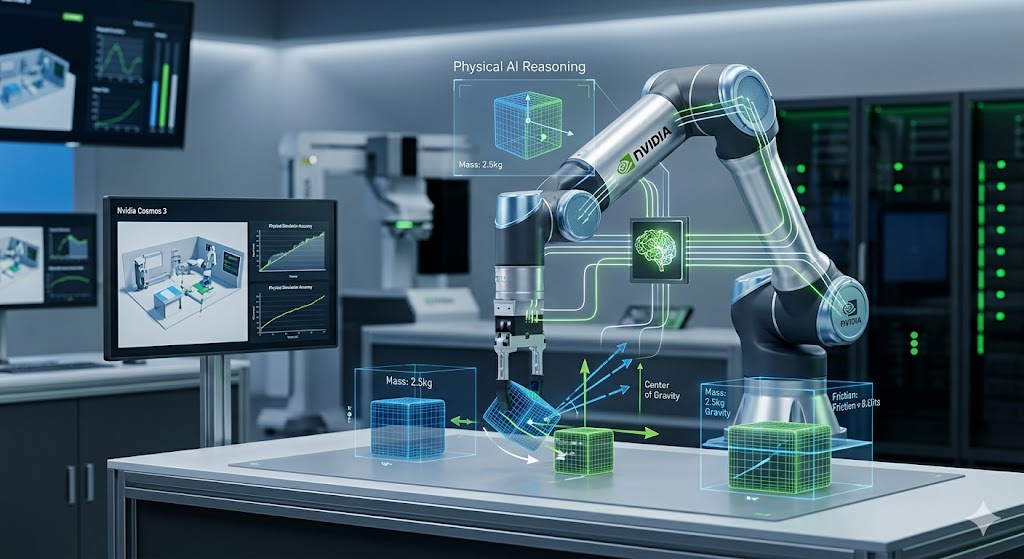
In the ever-evolving landscape of artificial intelligence, Nvidia continues to push the boundaries of what's possible. Their latest offering, Nvidia Cosmos 3, marks a significant advancement in the realm of physical AI reasoning and action models. This article delves into the features and implications of Cosmos 3, providing insights for developers, indie hackers, and startup founders eager to harness its potential.
What is Nvidia Cosmos 3?
Nvidia Cosmos 3 is a comprehensive platform that allows developers to create AI systems capable of understanding and interacting with the physical world. This involves:
- Physical AI Reasoning: Enabling machines to assess and respond to real-world scenarios effectively.
- Action Models: Developing sophisticated models that dictate how AI should act in various environments based on contextual understanding.
The platform leverages Nvidia's powerful graphics processing units (GPUs) and innovative software frameworks, making it a robust tool for developers looking to create intelligent applications.
Key Features of Nvidia Cosmos 3
Nvidia Cosmos 3 boasts several noteworthy features that enhance its usability and effectiveness:
1. Advanced Simulation Environment
Cosmos 3 provides a highly detailed simulation environment where developers can test their AI applications before deploying them in the real world. This feature allows for:
- Safe Testing: Experiment with AI behaviors without the risk of real-world consequences.
- Realistic Scenarios: Build and refine AI systems in environments that accurately reflect potential real-world challenges.
2. Integration with Existing Tools
Developers can easily integrate Cosmos 3 with popular frameworks and libraries, such as TensorFlow and PyTorch. This compatibility streamlines the development process, allowing teams to leverage their existing skills and tools while enhancing their AI systems with physical reasoning capabilities.
3. Scalable Architecture
The platform's architecture is designed to scale, accommodating everything from small projects to large-scale applications. This flexibility is crucial for indie hackers and startups who need to iterate rapidly and deploy efficiently.
4. Enhanced Data Utilization
Cosmos 3 enables developers to utilize vast amounts of data for training AI models. By harnessing the power of Nvidia's GPUs, users can process large datasets to improve the accuracy and performance of their applications. This focus on data-driven development aligns well with the current trends in AI.
Practical Applications of Nvidia Cosmos 3
Robotics
Robots equipped with AI that understands physical reasoning can better navigate environments, perform tasks, and interact with humans. With Cosmos 3, developers can create sophisticated robotic systems capable of:
- Autonomous Navigation: Robots that can understand their surroundings and make decisions based on physical constraints.
- Human Interaction: Robots that can engage with people in a more natural and intuitive manner.
Smart Cities
As urban areas become more connected, the need for intelligent systems that can reason about physical environments grows. Cosmos 3 can facilitate:
- Traffic Management: AI systems that analyze real-time data to optimize traffic flow and reduce congestion.
- Resource Management: Efficiently managing utilities and services based on predictive models.
Gaming and Entertainment
In the gaming industry, AI that can reason about physical interactions can create more immersive experiences. Developers can leverage Cosmos 3 for:
- Realistic NPC Behavior: Non-playable characters that react intelligently to player actions and environmental changes.
- Dynamic Environments: Gaming worlds that evolve based on player interactions, providing a unique experience for each user.
Comparison with Other AI Frameworks
To better understand where Nvidia Cosmos 3 stands in the market, let's compare it with other popular AI frameworks:
| Feature | Nvidia Cosmos 3 | TensorFlow | PyTorch |
|---|---|---|---|
| Physical AI Reasoning | Yes | Limited | Limited |
| Simulation Environment | Advanced | Basic | Basic |
| Integration | High | High | High |
| Scalability | Excellent | Good | Good |
| Data Processing | High-performance GPUs | CPU/GPU support | CPU/GPU support |
Getting Started with Nvidia Cosmos 3
For developers looking to dive into Nvidia Cosmos 3, here are some practical steps to get started:
- Familiarize Yourself with the Documentation: Review the official Nvidia documentation to understand the platform's capabilities and requirements.
- Set Up Your Development Environment: Ensure you have the necessary hardware (Nvidia GPUs) and software tools installed.
- Start with Sample Projects: Utilize the sample projects provided by Nvidia to learn the platform's features and best practices.
- Engage with the Community: Participate in forums and discussions to share insights and seek advice from other developers.
FAQ
What types of applications can be built with Nvidia Cosmos 3?
Nvidia Cosmos 3 is versatile and can be used for robotics, smart city solutions, gaming, and more, enabling developers to create applications that require physical reasoning.
Do I need specific hardware to use Nvidia Cosmos 3?
Yes, to fully leverage the capabilities of Cosmos 3, it's recommended to use Nvidia GPUs, as they provide the necessary processing power for AI reasoning tasks.
Is there a learning curve for new developers?
While there is a learning curve, particularly if you're new to AI and machine learning, Nvidia offers comprehensive documentation and support to help you get started.
Can I integrate Cosmos 3 with my existing AI projects?
Absolutely! Cosmos 3 is designed for easy integration with popular frameworks like TensorFlow and PyTorch, making it simple to enhance your existing projects.
What resources are available for learning Cosmos 3?
Nvidia provides extensive documentation, sample projects, and community forums to support developers in learning and utilizing Cosmos 3 effectively.
Bottom Line
Nvidia Cosmos 3 represents a significant leap forward in the field of physical AI reasoning and action modeling. By providing developers with the tools to create applications that can understand and interact with the physical world, Cosmos 3 opens up new avenues for innovation. Whether you're an indie hacker, a startup founder, or an established developer, leveraging this platform could be pivotal in building smarter applications that resonate with users. As AI continues to evolve, staying ahead of the curve with tools like Nvidia Cosmos 3 will be essential for those aiming to make an impact in the tech landscape.