Is AI Leading Us to Another Lost Decade in Frontend Development?
As AI technologies surge, are we facing a repeat of the frontend development challenges of the past decade? This article explores the implications for developers and startups.
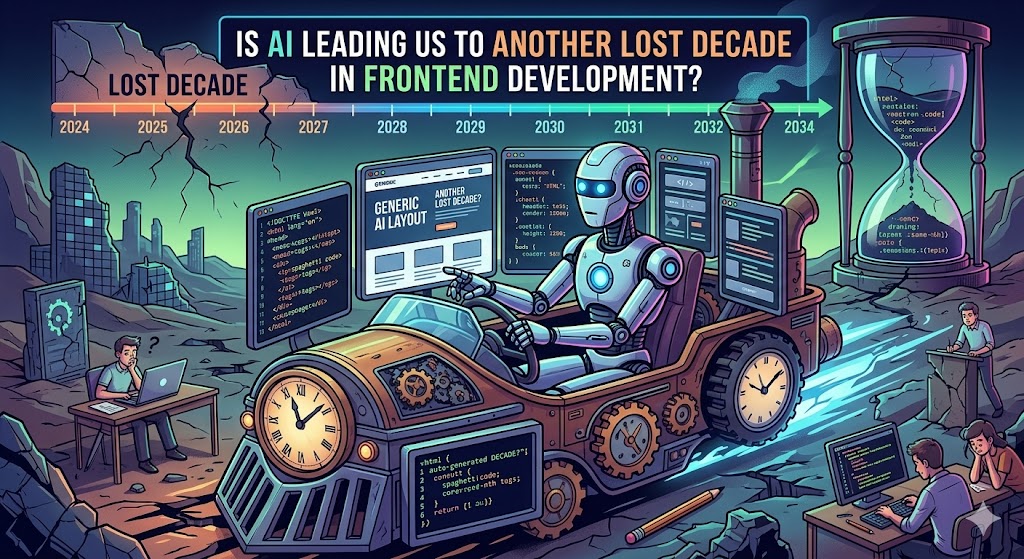
Introduction
In the rapidly evolving landscape of web development, the introduction of artificial intelligence (AI) has sparked discussions about its potential to reshape the industry. However, with this innovation comes a sense of déjà vu for many developers, particularly those who experienced the frontend development stagnation during the last decade. The question arises: Is AI leading us into another lost decade in frontend development?
A Brief History of the Lost Decade
The term "lost decade" refers to a period in the 2010s when frontend development seemed to stagnate. During this time, many frameworks emerged but failed to provide the long-term stability and scalability that developers needed. The proliferation of libraries such as AngularJS, Backbone, and others created a fragmented ecosystem that confused rather than empowered developers.
Key characteristics of this period included:
- Fragmentation of tools: Multiple frameworks with overlapping functionalities led to confusion.
- Rapid changes: Frequent updates and shifts in best practices made it hard for developers to keep pace.
- Skill mismatch: New frameworks often required steep learning curves, leaving many developers struggling to adapt.
The Rise of AI in Development
Fast forward to today, AI is becoming increasingly integrated into various aspects of development, from code generation to automated testing. Tools like GitHub Copilot and various AI-driven IDE enhancements promise to streamline workflows and improve efficiency. However, this surge in AI adoption raises concerns reminiscent of the previous lost decade:
Potential Pitfalls of AI Integration
- Over-reliance on automation: As developers lean heavily on AI tools, there may be a decline in foundational coding skills.
- Quality control issues: AI-generated code can introduce bugs, and the lack of human oversight may lead to significant vulnerabilities.
- Erosion of creativity: An over-dependence on AI might stifle innovation as developers rely on machine-generated solutions.
- Fragmentation of AI tools: Similar to the proliferation of frameworks in the past, the current AI landscape risks becoming cluttered with too many tools, complicating the development process.
Comparing the Past and Present
| Aspect | Lost Decade (2010s) | Current AI Integration (2020s) |
|---|---|---|
| Framework Stability | Frequent changes led to instability | AI tools evolve rapidly, creating uncertainty |
| Developer Skills | Skills became outdated quickly | Risk of losing core programming skills |
| Tool Fragmentation | Many frameworks with overlapping capabilities | Potential for excessive AI tools and plugins |
| Innovation | Creative solutions stifled by complexity | AI might limit unique problem-solving approaches |
Navigating the AI Landscape
To avoid repeating the mistakes of the past, developers, startup founders, and indie hackers must adopt a proactive approach towards integrating AI into their workflows. Here are some practical takeaways:
1. Focus on Fundamentals
Despite the allure of AI tools, maintaining a solid understanding of core programming principles is crucial. Developers should prioritize learning foundational skills to ensure they can effectively use AI as an aid rather than a crutch.
2. Evaluate AI Tools Critically
Before adopting any AI tool, conduct thorough evaluations. Assess its track record, community support, and potential for integration into existing workflows. Favor tools that enhance rather than complicate the development process.
3. Encourage Creativity
Developers should be encouraged to use AI as a complement to their creativity, not a replacement. Challenge teams to leverage AI for mundane tasks, freeing up time for innovative problem-solving and original thought.
4. Stay Updated
The tech landscape is ever-changing. Regularly invest time in learning about new tools, frameworks, and practices in both AI and frontend development. This knowledge will serve as a valuable asset in navigating future challenges.
FAQ
Q1: What are the main risks of relying on AI for frontend development?
A1: The main risks include over-reliance on automation, potential quality control issues, erosion of creativity, and fragmentation of AI tools.
Q2: How can developers ensure they don’t fall behind in their skills?
A2: Developers should focus on mastering foundational skills, regularly engage in learning opportunities, and critically evaluate new tools and methodologies.
Q3: Are there any specific tools that are leading the AI integration trend?
A3: Tools like GitHub Copilot are at the forefront, providing code suggestions and enhancing productivity, but developers should remain selective in their adoption.
Q4: What should startups consider when integrating AI into their development processes?
A4: Startups should evaluate the stability and support of AI tools, prioritize maintaining core skills among their development team, and encourage a culture of innovation.
Q5: Is there a way to measure the effectiveness of AI tools in development?
A5: Yes, effectiveness can be measured through metrics such as productivity improvements, reduction in bugs, and overall team satisfaction with the development process.
Bottom Line
While AI holds immense potential to transform frontend development, it also poses significant risks that could echo the challenges faced during the lost decade. By focusing on foundational skills, critically evaluating tools, and fostering a culture of creativity and continuous learning, developers can navigate the complexities of AI integration effectively. The key lies in leveraging AI as an empowering tool rather than a substitute for human ingenuity.