Indexing Images for RAG: Enhancing Search and Retrieval Efficiency
Discover advanced techniques for indexing images in Retrieval-Augmented Generation (RAG) systems, optimizing search efficiency and enhancing user experience.
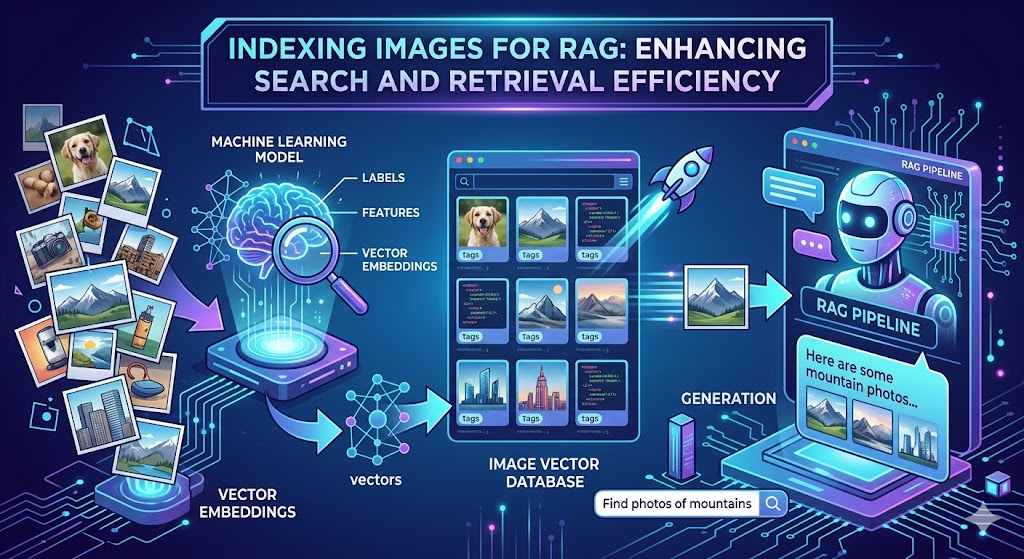
Understanding RAG and the Importance of Image Indexing
Retrieval-Augmented Generation (RAG) systems combine the strengths of retrieval-based and generative models, enabling them to fetch and generate contextually relevant information efficiently. As we increasingly rely on visual content, the need for effective image indexing becomes imperative.
Why Indexing Matters
- Search Efficiency: Well-indexed images can drastically reduce search times, enabling faster access to relevant data.
- Enhanced User Experience: Users expect quick and accurate results; effective indexing ensures they find what they need without frustration.
- Streamlined Workflows: Developers and content creators benefit from organized image databases, facilitating smoother processes.
Key Techniques for Image Indexing in RAG
To make the most of your image indexing efforts, consider the following techniques:
1. Metadata Utilization
Metadata plays a crucial role in indexing images. It provides essential context, making it easier for algorithms to understand and retrieve images. Key metadata elements include:
- Title: A clear and descriptive title for each image.
- Tags: Relevant keywords that represent the image content.
- Alt Text: Descriptions that improve accessibility and provide additional context.
2. Feature Extraction
Using advanced algorithms to extract features from images can significantly improve indexing capabilities. Techniques may include:
- Convolutional Neural Networks (CNNs): Ideal for identifying patterns and features in images.
- SIFT and SURF: Methods for detecting and describing local features.
3. Clustering Techniques
Organizing images into clusters based on visual similarity can enhance retrieval speed and accuracy. Common clustering methods include:
- K-means Clustering: Groups images based on feature similarity.
- Hierarchical Clustering: Builds a tree of clusters, allowing for more nuanced categorization.
4. Database Optimization
Choosing the right database technology is essential for efficient image indexing. Considerations include:
- NoSQL Databases: Generally better for unstructured data like images.
- Graph Databases: Excellent for managing relationships between images, tags, and metadata.
5. Using AI for Enhanced Indexing
Integrating AI technologies can transform how images are indexed. Machine learning models can automate the tagging and feature extraction processes, making indexing not only faster but also more accurate.
Comparison of Image Indexing Techniques
| Technique | Advantages | Disadvantages |
|---|---|---|
| Metadata Utilization | Easy to implement; improves context | Relies on accurate input |
| Feature Extraction | High accuracy; captures complex features | Computationally intensive |
| Clustering Techniques | Enhances organization and retrieval speed | Requires tuning for optimal results |
| Database Optimization | Improves storage and retrieval | Complexity in setup and management |
| AI Integration | Automates processes; increases accuracy | Requires initial investment and training |
Practical Applications of Indexed Images in RAG
With effective image indexing, RAG systems can be utilized across various domains:
- E-commerce: Enhancing product search capabilities through visual recognition.
- Medical Imaging: Quickly retrieving relevant images for diagnostics.
- Social Media: Improving content discovery based on visual elements.
Best Practices for Developers and Founders
To ensure your image indexing process is efficient and effective, consider the following best practices:
- Regular Updates: Ensure that your indexing algorithms and metadata are regularly updated to reflect new data and trends.
- User Feedback: Incorporate user feedback to refine your indexing strategies, making them more aligned with user needs.
- Cross-disciplinary Collaboration: Work with data scientists, UX designers, and content creators to create a holistic image indexing strategy.
FAQ
What is RAG?
RAG stands for Retrieval-Augmented Generation, which combines retrieval-based and generative models to enhance information access and generation.
Why is image indexing important in RAG systems?
Image indexing enhances search efficiency, improves user experience, and streamlines workflows by organizing visual content effectively.
How can I implement AI in my image indexing process?
Integrate machine learning models for automated tagging, feature extraction, and clustering to improve accuracy and speed.
What metadata should I include for effective indexing?
Key metadata includes titles, tags, alt text, and any additional descriptions that provide context for the images.
What database technologies are best suited for image indexing?
NoSQL and graph databases are typically more effective for managing unstructured image data and their relationships.
Bottom Line
Effective image indexing is a cornerstone of efficient retrieval systems in RAG. By employing advanced techniques and best practices, developers and startup founders can significantly enhance user experience and operational workflows. Investing time and resources into refining your indexing strategies will pay dividends in the long run, ensuring your applications remain competitive and user-friendly.