The Impact of AI Agents on Startup Roles: A Shift in Dynamics
As AI agents increasingly automate tasks, the landscape of startup roles is evolving. This article explores the implications for founders, developers, and teams.
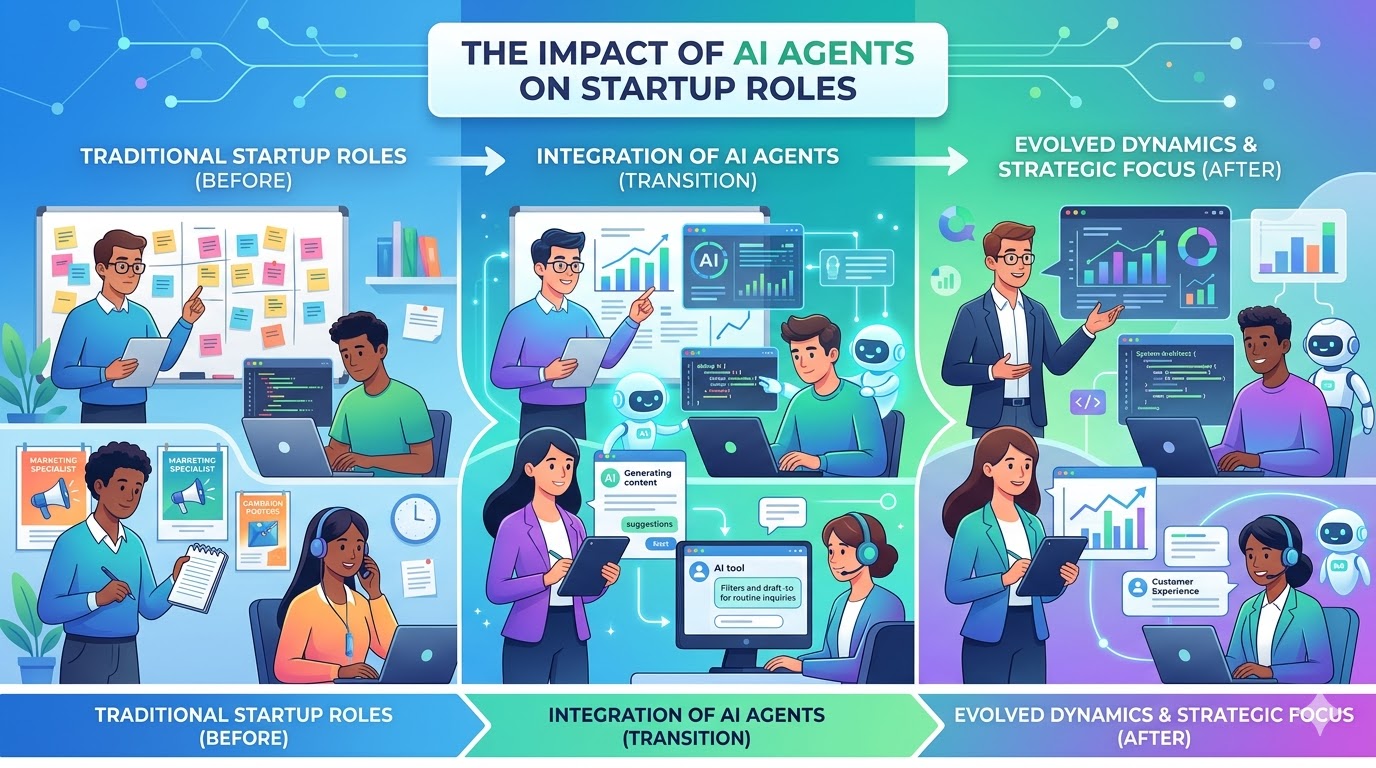
The Rise of AI Agents in Startups
Understanding AI Agents
AI agents, powered by machine learning and automation technologies, are increasingly taking on tasks that were traditionally handled by human employees. From managing customer inquiries to analyzing data, these agents can work around the clock, offering efficiency and consistency that are hard to match.
The Shift in Startup Dynamics
As AI agents become more prevalent, the landscape of startup roles is inevitably changing. Here are a few key areas where this shift is evident:
- Task Automation: Routine tasks such as scheduling, data entry, and customer service inquiries are now being managed by AI agents, freeing up human resources for more strategic roles.
- Enhanced Decision Making: AI can analyze vast amounts of data quickly, providing insights that help founders make informed decisions. This ability can shift the focus of roles from operational tasks to strategic planning.
- Skill Evolution: The demand for skills is evolving. As AI takes over more repetitive tasks, roles will increasingly require advanced problem-solving, creativity, and emotional intelligence.
The Impact on Team Structures
The integration of AI agents into startup operations is not merely about replacing human roles. Instead, it leads to a transformation in team structures and dynamics:
| Role Type | Pre-AI Integration | Post-AI Integration |
|---|---|---|
| Customer Support | Human-centric, empathetic responses | AI-assisted, data-driven interactions |
| Data Analysis | Manual data collection and reporting | Automated insights and predictive analytics |
| Marketing | Traditional outreach and campaigns | AI-optimized content and targeted ads |
| Product Development | Iterative testing based on user feedback | Data-driven development cycles |
The Human Element: Adapting to Change
While AI agents can handle many tasks, the human element remains irreplaceable. Here are some ways teams can adapt:
- Upskill: Invest in training programs that focus on AI literacy and advanced analytical skills.
- Focus on Creativity: Encourage team members to engage in creative problem-solving and innovation, areas where human insight is invaluable.
- Collaborate with AI: Foster a culture where humans and AI agents work together, leveraging the strengths of both to enhance productivity and creativity.
Practical Takeaways for Startup Founders
To stay ahead in this evolving landscape, startup founders should consider the following strategies:
- Embrace AI Tools: Integrate AI agents into your operations to streamline processes and enhance efficiency.
- Redefine Roles: Assess how AI could change existing roles and adjust responsibilities accordingly to leverage human strengths.
- Promote a Culture of Learning: Create an environment where continuous learning is encouraged, helping teams adapt to new technologies and methodologies.
FAQ
Q: Will AI agents completely replace human jobs in startups?
A: Not entirely. AI agents will take over repetitive tasks, but human roles will evolve, focusing more on strategic and creative aspects.
Q: How can startups ensure a smooth transition to AI integration?
A: Startups should invest in training, redefine roles, and foster collaboration between humans and AI agents to maximize productivity.
Q: What skills will be in demand as AI takes over more tasks?
A: Skills in problem-solving, creativity, and emotional intelligence will be increasingly valuable as routine tasks become automated.
Q: Can AI help with decision-making in startups?
A: Yes, AI can analyze data quickly and provide insights, allowing founders to make informed decisions based on real-time analytics.
Q: How should teams adapt to the rise of AI agents?
A: Teams should focus on continuous learning, embrace new technologies, and collaborate with AI to enhance their effectiveness.
Bottom Line
The integration of AI agents into startup operations marks a significant shift in how teams function and roles are defined. By embracing these changes and adapting to the evolving landscape, founders and their teams can leverage AI to enhance productivity while focusing on the uniquely human aspects of innovation and creativity. As we move forward, the collaboration between AI agents and human talent will define the future of work in startups.