Identifying and Addressing Various LLM Smells in Development
Dive into the world of LLM smells and learn how to identify, analyze, and fix common issues that arise during AI model development.
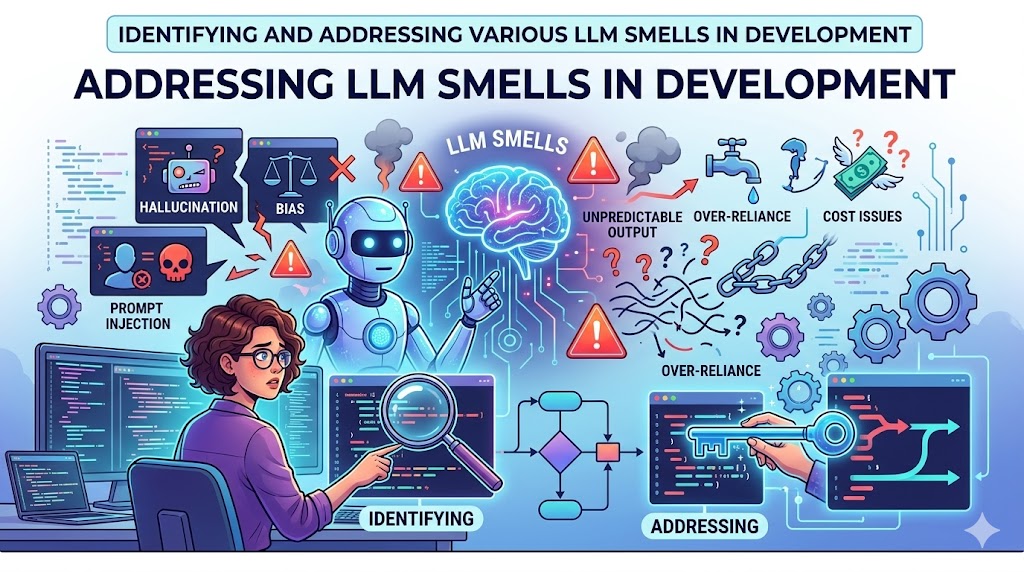
Understanding LLM Smells
As machine learning and natural language processing continue to evolve, developers are increasingly utilizing Large Language Models (LLMs) to build advanced applications. However, just like traditional software, LLMs can exhibit certain 'smells' that indicate underlying issues in their design or implementation. Recognizing these smells is crucial for developers and startup founders aiming to optimize their AI models.
What Are LLM Smells?
LLM smells refer to patterns or indicators that suggest a problem within the structure or functionality of a language model. These can range from inefficient training processes to suboptimal performance in generating responses. Identifying these issues early can prevent wasted resources and improve the effectiveness of your AI solutions.
Common Types of LLM Smells
Here are some prevalent LLM smells that developers should be aware of:
1. Overfitting Smell
- Description: When a model performs well on training data but poorly on unseen data, it indicates overfitting. This smell often arises from insufficient data or overly complex models.
- Solution: To mitigate overfitting, employ techniques such as regularization, dropout, or expanding your training dataset.
2. Underfitting Smell
- Description: If a model fails to capture the underlying pattern of the data, it is underfitting. This can result from overly simplistic models or insufficient training.
- Solution: Consider increasing model complexity, adjusting hyperparameters, or providing more representative training samples.
3. Bias Smell
- Description: Models trained on biased datasets can produce skewed outputs, reflecting societal biases. This smell can lead to ethical concerns and reputational damage.
- Solution: Ensure diverse datasets are used for training and implement bias detection mechanisms to identify and rectify biased outputs.
4. Latency Smell
- Description: High latency in response times can slow down application performance and user experience. This smell often indicates inefficient model architecture.
- Solution: Optimize the model by reducing its size, using quantization, or employing efficient serving architectures.
5. Robustness Smell
- Description: A lack of robustness in model responses can result in erratic behavior under different conditions. This smell is particularly concerning for applications requiring consistency.
- Solution: Test your model under varied conditions and fine-tune it to ensure it can handle a wide range of inputs.
Comparing LLM Smells
To better understand how these smells impact LLM performance, consider the following table:
| LLM Smell | Description | Common Causes | Potential Solutions |
|---|---|---|---|
| Overfitting | High training accuracy, low test accuracy | Complex models, not enough data | Regularization, more data |
| Underfitting | Low accuracy on both training and test data | Too simple models, insufficient training | Increase complexity, better training data |
| Bias | Skewed model outputs reflecting societal biases | Biased training data | Diverse datasets, bias detection mechanisms |
| Latency | Slow response times affecting user experience | Inefficient architecture | Model optimization, efficient serving |
| Robustness | Inconsistent responses under varied conditions | Lack of diverse training scenarios | More varied testing, fine-tuning |
Strategies for Identifying LLM Smells
Recognizing these smells involves a combination of testing, validation, and continuous monitoring. Here are some strategies to employ:
- Data Analysis: Regularly review your training and validation datasets to ensure they are diverse and representative.
- Model Evaluation: Use metrics such as accuracy, precision, and recall to evaluate model performance consistently across different datasets.
- User Feedback: Collect feedback from users to identify areas where the model may be underperforming or biased.
- A/B Testing: Implement A/B testing to compare different model versions and their performance in real-world scenarios.
Practical Takeaways for Developers
- Continuous Learning: AI and machine learning are rapidly evolving fields. Stay updated with the latest research and best practices to avoid common pitfalls.
- Embrace Automation: Tools like ScreenMint can help automate the generation of ASO metadata and screenshots, allowing developers to focus on refining their models.
- Iterate: Don't expect perfection with your LLMs on the first attempt. Use feedback and performance data to iteratively improve your models.
Conclusion
Identifying and addressing LLM smells is essential for developers looking to optimize their AI models. By understanding common issues and implementing effective strategies, you can enhance the performance, reliability, and ethical considerations of your applications. The journey of refining your large language models is ongoing, and awareness of these smells can significantly impact your success.
FAQ
Q1: What is the best way to prevent overfitting in LLMs?
A1: Utilize techniques such as regularization, dropout layers, and increase the size of your training dataset to help prevent overfitting.
Q2: How can I identify bias in my language model?
A2: Implement bias detection tools and continuously review your training data for diversity to identify and address bias in your model outputs.
Q3: What metrics should I use to evaluate my LLM?
A3: Common metrics include accuracy, precision, recall, and F1 score, which help gauge the performance of your model on various datasets.
Q4: How can I improve the robustness of my model?
A4: Test your model under diverse conditions and user scenarios, and fine-tune it based on the feedback and performance metrics you collect.
Q5: Can automation help me manage LLM smells effectively?
A5: Yes, tools like ScreenMint automate many aspects of app development, allowing you to focus on refining your models while ensuring efficient asset management.