Exploring the Eureka Machine: Nature-Inspired AI Innovations
The Eureka machine mimics nature's intelligence, challenging conventional AI limits and offering new paths for exploration and problem-solving.
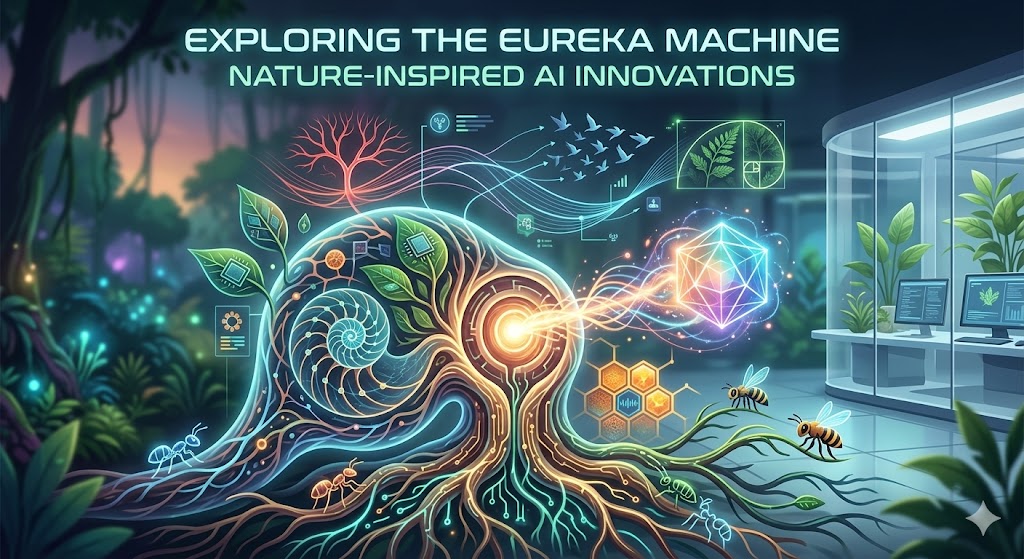
The Concept of the Eureka Machine
The Eureka machine presents an intriguing intersection of artificial intelligence and natural processes. Unlike conventional AI systems that rely heavily on data-driven algorithms, this machine is designed to think and operate similarly to the natural world. This innovative approach allows it to explore regions of problem-solving that traditional AI cannot navigate effectively.
Understanding Nature-Inspired Intelligence
To appreciate the significance of the Eureka machine, it’s essential to delve into the principles that underlie nature-inspired intelligence. Here are some key concepts:
- Biomimicry: This principle involves emulating designs and processes found in nature. For example, studying how ecosystems balance themselves can inspire algorithms that maintain equilibrium in data sets.
- Emergent Behavior: In nature, simple rules can lead to complex behaviors. The Eureka machine harnesses this idea by using simple computational rules to generate innovative solutions.
- Adaptability: Nature is inherently adaptable, evolving in response to environmental changes. The Eureka machine leverages this adaptability, allowing it to refine its approaches based on feedback from its surroundings.
What Sets the Eureka Machine Apart?
The Eureka machine distinguishes itself from traditional AI systems through several innovative features:
| Feature | Traditional AI | Eureka Machine |
|---|---|---|
| Learning Approach | Data-driven, supervised learning | Nature-inspired, adaptive learning |
| Problem-Solving | Often constrained to known parameters | Explores uncharted territories |
| Efficiency | Limited by data size and quality | Optimizes through natural processes |
| Creativity | Generates outputs based on input data | Innovates beyond existing knowledge |
Applications of the Eureka Machine
The potential applications for the Eureka machine are vast and varied. Here are a few areas where it could make a significant impact:
- Environmental Studies: By mimicking natural ecosystems, the Eureka machine can analyze complex environmental data, leading to better conservation strategies.
- Healthcare: In drug discovery, this machine could simulate biological interactions more effectively than traditional methods, potentially accelerating the development of new treatments.
- Robotics: Nature-inspired algorithms can enhance the functionality of robots, allowing them to adapt to dynamic environments like their biological counterparts.
- Creative Industries: From art generation to music composition, the Eureka machine can introduce new forms of creativity by exploring beyond conventional frameworks.
The Challenges Ahead
While the Eureka machine shows great promise, several challenges must be addressed:
- Integration with Existing Systems: The transition from traditional AI systems to nature-inspired models may encounter resistance due to established practices.
- Understanding Complexity: The principles of nature can be immensely complex, making it difficult to create algorithms that accurately replicate these processes.
- Ethical Considerations: As with any AI technology, ethical implications regarding autonomy, decision-making, and consequences of machine-generated actions must be carefully considered.
Practical Takeaways for Developers and Founders
For indie hackers and startup founders looking to leverage the concepts behind the Eureka machine, consider the following practical takeaways:
- Embrace Biomimicry: Explore how natural processes can inform your product design or problem-solving approaches.
- Foster Adaptability: Build systems that can learn from their environment, allowing your applications to evolve over time.
- Encourage Innovation: Create a culture that values exploration and creativity, encouraging your team to think outside traditional confines.
FAQ
Q: How does the Eureka machine differ from standard AI?
A: The Eureka machine uses nature-inspired principles to explore problem-solving beyond the limits of traditional data-driven AI.
Q: What industries can benefit from the Eureka machine?
A: It has potential applications in environmental studies, healthcare, robotics, and creative industries.
Q: What are the main challenges facing the Eureka machine?
A: Challenges include integration with existing systems, understanding complex natural processes, and addressing ethical considerations.
Q: Can the principles behind the Eureka machine be applied to existing applications?
A: Yes, developers can incorporate biomimicry and adaptability into their systems to enhance functionality and innovation.
Bottom Line
The Eureka machine represents a fascinating leap into a realm where artificial intelligence aligns more closely with the intricate workings of nature. By moving beyond traditional limits, this innovative approach opens new avenues for exploration, creativity, and problem-solving. As developers and founders, embracing these concepts can lead to groundbreaking advancements in technology that are not only effective but also more in harmony with the world around us.