Decoding Startup Potential: How AI Can Help VCs Filter Out the Noise
Discover how AI is transforming venture capital by helping investors identify which startups truly have potential and which may be '90% bollocks'.
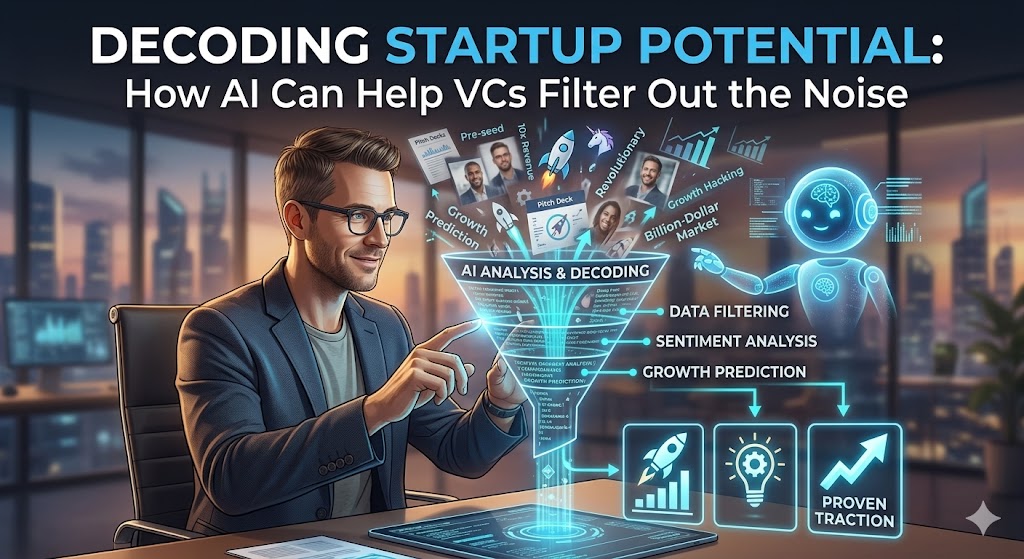
Introduction
The startup landscape is notoriously unpredictable. For every unicorn that emerges, countless others fade into obscurity, often leaving investors scratching their heads about where they went wrong. A recent development in this space involves an ex-Spotify executive leveraging AI technologies to help venture capitalists (VCs) cut through the noise and identify which startups are truly worth their time and money.
The Challenge of Startup Evaluation
Investing in startups is a high-stakes endeavor. VCs are often inundated with pitches, and discerning which ventures have real potential can be daunting. The challenge lies not only in the sheer volume of proposals but also in the subjective nature of evaluating ideas, teams, and market potential.
- Volume of Proposals: VCs receive thousands of pitches annually.
- Subjective Evaluation: Assessing the viability of a startup often relies on gut feelings and past experiences.
- Market Conditions: Trends can shift rapidly, complicating the landscape further.
This is where AI comes into play. By employing advanced data analytics and machine learning algorithms, VCs can enhance their decision-making processes, allowing for a more systematic and objective approach to evaluating startups.
The Role of AI in Startup Evaluation
The ex-Spotify boss advocates for the integration of AI tools to streamline the evaluation process. Here’s how AI can help:
1. Data-Driven Insights
AI can analyze vast amounts of data from multiple sources, including market trends, competitor performance, and historical success rates of similar startups. This creates a comprehensive picture of a startup's potential.
2. Predictive Analytics
Machine learning models can predict the likelihood of success based on various factors, such as the startup's business model, team background, and market conditions. This allows VCs to focus on ventures that demonstrate higher chances of growth.
3. Sentiment Analysis
AI can sift through public sentiment and feedback regarding a startup, analyzing social media, news articles, and customer reviews. Understanding public perception can provide valuable insights into a startup's viability.
4. Risk Assessment
AI tools can help identify potential risks associated with a startup, including financial instability, market saturation, and management issues. By quantifying risks, investors can make more informed decisions.
5. Continuous Learning
AI algorithms can learn from past investment outcomes, refining their models and improving accuracy over time. This adaptability is crucial in the ever-changing landscape of startups.
The Implications for VCs
The introduction of AI into startup evaluation has several implications for VCs:
- Efficiency: AI significantly reduces the time spent on initial evaluations, allowing VCs to focus on deeper analyses of high-potential startups.
- Reduced Bias: By relying on data rather than gut feelings, VCs can mitigate biases that often affect investment decisions.
- Informed Decision-Making: With enhanced insights, VCs can make decisions based on evidence rather than intuition alone.
A Comparison of Traditional vs. AI-Enhanced Evaluation
| Aspect | Traditional Evaluation | AI-Enhanced Evaluation |
|---|---|---|
| Data Processing Speed | Slow | Fast |
| Subjectivity | High | Low |
| Risk Identification | Limited | Comprehensive |
| Adaptability | Fixed | Evolving |
| Insight Generation | Tends to be anecdotal | Data-driven and objective |
Case Study: The Ex-Spotify Initiative
The initiative led by the ex-Spotify boss illustrates the practical application of AI in the venture capital realm. Although details about the specific algorithms and datasets used remain proprietary, the methodology focuses on:
- Collecting Diverse Data: Engaging with various industries to gather a wide range of data points.
- Building Robust Models: Creating machine learning models that can predict startup success with increasing accuracy.
- Partnering with VCs: Collaborating directly with investment firms to refine the tools and ensure they meet industry needs.
This approach has already shown promise, with early feedback indicating that VCs feel more confident in their evaluations when supported by AI insights.
Practical Takeaways for Startup Founders
As a startup founder, understanding how VCs evaluate potential investments is crucial. Here are some practical tips to keep in mind:
- Data is King: Ensure your startup collects relevant data that can help illustrate market potential and customer interest.
- Build a Strong Team: Highlight the expertise and track record of your team, as this is a critical factor in investor evaluations.
- Market Awareness: Stay informed about market trends and adjust your business model accordingly to align with investor interests.
- Leverage AI Tools: Consider using AI tools to analyze your startup’s strengths and weaknesses, providing you with insights that can enhance your pitch.
FAQs
Q1: How can AI help VCs evaluate startups?
A1: AI offers data-driven insights, predictive analytics, sentiment analysis, risk assessments, and continuous learning to enhance decision-making.
Q2: What are the main benefits of using AI in venture capital?
A2: Benefits include improved efficiency, reduced bias in decision-making, and enhanced risk identification, allowing for more informed investments.
Q3: Can AI completely replace human intuition in startup evaluations?
A3: While AI can significantly enhance the evaluation process, human intuition and experience remain vital in interpreting complex data and making final decisions.
Q4: What should startup founders focus on when seeking investment?
A4: Founders should focus on collecting relevant data, building a strong team, being market-aware, and considering AI tools for self-evaluation.
Q5: Are there any risks associated with relying on AI for investment decisions?
A5: Yes, risks include over-reliance on data without human context, potential biases in AI algorithms, and the need for continuous model updates to adapt to changing market conditions.
Bottom Line
The intersection of AI and venture capital presents an exciting opportunity for both investors and startups. While it doesn't eliminate the inherent risks of investing, it provides a more structured approach to evaluating potential. As this technology continues to evolve, it will likely play an increasingly pivotal role in shaping the future of startup investments. By understanding these dynamics, both founders and investors can better navigate the complex startup ecosystem, making informed decisions that lead to sustainable growth.