Containing Claude: Anthropic's Approach to AI Safety Across Products
Anthropic's Claude represents a significant advancement in AI technology. Discover how the company manages safety and reliability across all its products.
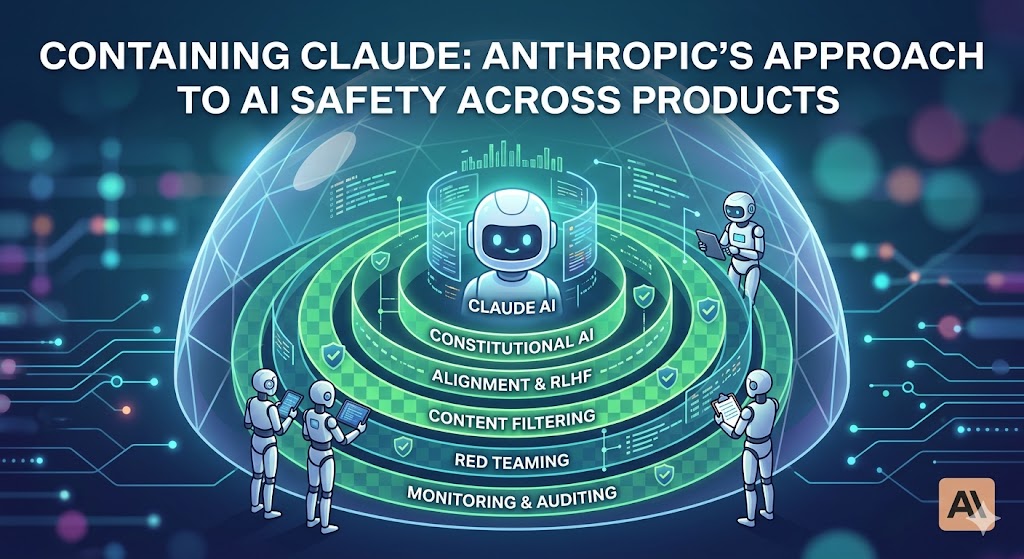
Introduction
In a landscape increasingly dominated by artificial intelligence, ensuring the safety and reliability of AI systems has become paramount. Anthropic, a prominent player in the AI field, has developed Claude, a sophisticated AI model designed to assist users while adhering to stringent safety protocols. This article explores how Anthropic manages and contains Claude across its various products, focusing on the innovative strategies they employ to maintain AI safety and reliability.
Understanding Claude: The AI Model
Claude is not just another AI model; it represents a significant leap in machine learning capabilities. Developed with an emphasis on alignment with human intentions and safety, Claude aims to provide a robust framework for interactions across diverse applications. Understanding how Anthropic contains Claude is essential for grasping the broader implications of AI safety in product deployment.
Key Features of Claude
- Human Alignment: Claude is designed to understand and align with user intentions, making it a more reliable tool for various applications.
- Robust Safety Mechanisms: With built-in safety protocols, Claude minimizes the risk of producing harmful or misleading outputs.
- Scalability Across Products: Claude’s architecture allows for seamless integration into different products, enhancing their capabilities while ensuring safety.
Strategies for Containment in Products
Anthropic employs several strategies to ensure Claude operates safely across its product range. These strategies are crucial in managing the complexities of AI behavior while providing valuable user interactions.
1. Layered Safety Protocols
One of the primary strategies is the implementation of layered safety protocols. This approach involves multiple checkpoints to evaluate Claude's outputs and interactions before they reach the end user.
- Pre-Deployment Testing: All outputs are rigorously tested in controlled environments to identify potential issues before public release.
- Continuous Monitoring: Post-deployment, Claude’s interactions are continuously monitored to catch any anomalies that may arise during real-world usage.
2. Feedback Loops
Feedback mechanisms are critical to refining Claude’s operations. Anthropic encourages user feedback to improve the model continually. This includes:
- User Reports: End users can report problematic outputs, which are then analyzed for patterns that may require adjustments in Claude’s algorithms.
- Iterative Updates: Based on feedback, Anthropic regularly updates Claude, enhancing its ability to understand and align with user needs more effectively.
3. Transparency and Explainability
For AI systems to gain trust, transparency is essential. Anthropic emphasizes explainability in Claude’s decision-making processes. This involves:
- Clear Documentation: Providing users with comprehensive documentation on how Claude makes decisions and the reasoning behind its outputs.
- User Education: Educating users on AI capabilities and limitations fosters a better understanding of how to interact with Claude safely.
Application of Containment Strategies
Use Cases of Claude Across Products
Anthropic’s containment strategies are evident in various applications of Claude, ranging from customer support solutions to content generation tools. Here’s how these strategies manifest in real-world scenarios:
| Product Type | Containment Strategy Used | User Benefit |
|---|---|---|
| Customer Support | Layered safety protocols for response validation | Accurate and safe customer interactions |
| Content Generation | Continuous monitoring and feedback loops for output improvement | High-quality, relevant content generation |
| Educational Tools | Transparency and explainability to guide user interactions | Empowered users making informed decisions |
Examples of Successful Containment
- Customer Support Chatbots: Utilizing Claude, companies have seen reduced error rates in responses, thanks to rigorous pre-deployment testing.
- Content Creation: Tools powered by Claude have generated thousands of documents while maintaining high standards of accuracy, aided by continuous monitoring.
- Learning Platforms: Educational tools using Claude provide users with real-time feedback, enhancing learning experiences through clear explanations of AI-generated suggestions.
Challenges of Containing AI
While Anthropic has made significant strides in AI containment, challenges remain. These include:
- Evolving AI Behavior: As Claude learns from interactions, ensuring consistent performance can be complicated.
- User Misunderstandings: Users may misinterpret AI outputs, leading to potential misuse or overreliance.
- Balancing Innovation with Safety: Striking the right balance between pushing technological boundaries and ensuring safety is a constant challenge for AI developers.
Future Directions for Anthropic
Looking ahead, Anthropic is likely to continue refining its containment strategies. Areas for potential growth include:
- Enhanced Learning Algorithms: Improving how Claude learns from user interactions to further minimize risks.
- Broader Use Cases: Expanding Claude’s deployment in new sectors while maintaining stringent safety protocols.
- Community Engagement: Fostering a community-driven approach to AI safety, where users and developers can collaborate on best practices.
FAQ
What is Claude?
Claude is an advanced AI model developed by Anthropic, designed to assist users while ensuring safety and alignment with human intentions.
How does Anthropic ensure AI safety?
Anthropic employs layered safety protocols, continuous monitoring, and user feedback loops to ensure Claude operates safely across its product range.
Why is transparency important in AI?
Transparency helps build trust with users, allowing them to understand how AI systems like Claude make decisions and the reasoning behind their outputs.
What challenges does Anthropic face in containing Claude?
Challenges include evolving AI behavior, user misunderstandings, and balancing innovation with safety.
How can I provide feedback on Claude?
Anthropic encourages users to report any problematic outputs through their feedback mechanisms, helping to refine and improve Claude's performance.
Bottom Line
As AI systems become more integrated into our daily lives, the importance of safety and reliability cannot be overstated. Anthropic's approach to containing Claude across its products offers valuable insights into best practices for AI development. By employing layered safety protocols, fostering transparency, and engaging with users, Anthropic is setting a benchmark for how AI can be managed responsibly. As developers and founders, understanding and implementing these strategies can help ensure that the AI systems we create are not only innovative but also safe and aligned with user needs.