How Chinese AI Competitors Challenge OpenAI and Anthropic
As Chinese AI companies gain momentum, OpenAI and Anthropic face significant challenges. Explore the implications for the AI landscape and what it means for developers and startups.
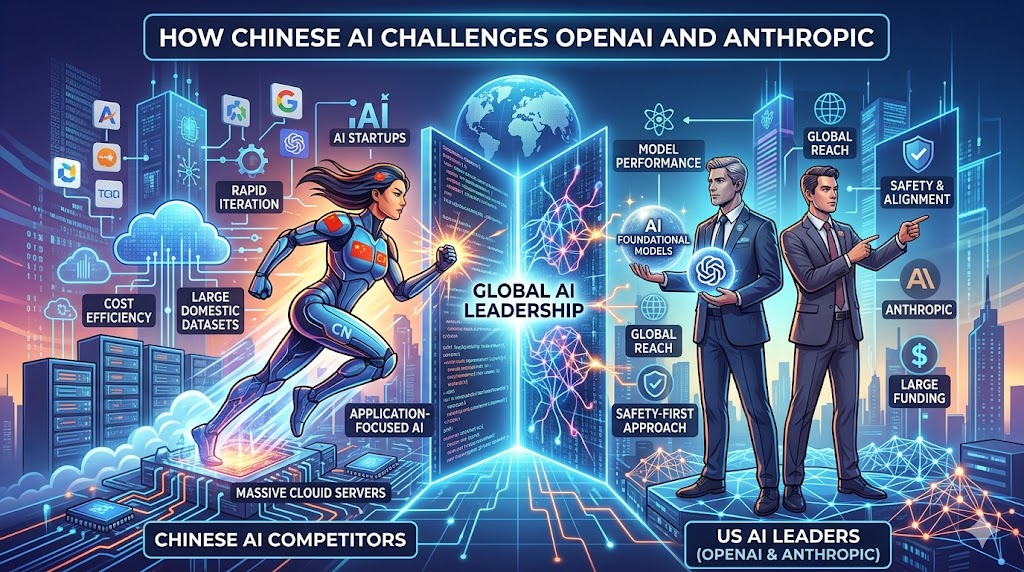
How Chinese AI Competitors Challenge OpenAI and Anthropic
The artificial intelligence (AI) landscape is evolving rapidly, with significant implications for developers, startups, and tech enthusiasts. The rise of Chinese AI rivals is reshaping this landscape, presenting formidable challenges to established players like OpenAI and Anthropic. In this article, we will explore the nature of this competition, its potential impacts, and what it means for the future of AI.
The Current State of AI: A Global Perspective
As AI technology becomes more integrated into various sectors, the global race to dominate this field intensifies. OpenAI and Anthropic have led the charge in developing advanced AI models, pushing boundaries in natural language processing, machine learning, and more. However, with the emergence of Chinese companies like Baidu, Alibaba, and Tencent, the dynamics are shifting.
Key Players in the Chinese AI Landscape
- Baidu: Known for its search engine, Baidu is making strides in AI with its ERNIE model, which competes directly with OpenAI's GPT models.
- Alibaba: Alibaba's DAMO Academy is at the forefront of AI research, focusing on applications ranging from e-commerce to cloud computing.
- Tencent: With investments in various AI technologies, Tencent is leveraging AI for gaming, social media, and financial services.
These companies are not only well-funded but also have access to vast data resources, which is crucial for training effective AI models.
The Competitive Advantage of Chinese AI Firms
Several factors contribute to the competitive edge of Chinese AI players:
1. Data Availability
China's unique regulatory environment allows companies to access and utilize vast amounts of data. This data is essential for training machine learning models and developing effective AI solutions. In contrast, data privacy regulations in the West can hinder the access to critical training data.
2. Government Support
The Chinese government is heavily investing in AI research and development, viewing it as a strategic priority. This backing translates into financial support, infrastructure development, and policies that favor rapid innovation.
3. Market Demand
China's massive consumer base fuels demand for AI applications in various sectors, including finance, healthcare, and retail. This demand accelerates the development and deployment of AI technologies.
4. Talent Pool
China boasts a growing pool of AI talent, with universities and research institutions producing skilled professionals equipped to drive AI advancements.
The Impact on OpenAI and Anthropic
As Chinese AI companies continue to innovate and expand their capabilities, OpenAI and Anthropic face several challenges:
1. Increased Competition
The entry of Chinese firms into the AI market means greater competition for talent, resources, and market share. This competition can spur innovation but may also lead to a race to the bottom in terms of pricing and quality.
2. Pressure to Innovate
With the rapid advancements in AI capabilities from Chinese companies, OpenAI and Anthropic must continually innovate to stay relevant. This pressure can lead to faster deployment cycles but also raises concerns over the ethical use of AI technology.
3. Collaboration and Partnerships
To maintain their competitive edge, OpenAI and Anthropic may seek collaborations with other tech companies, research institutions, or even governments. This could lead to new partnerships that enhance their capabilities but also shift the focus of their research agendas.
4. Regulatory Challenges
As competition increases, regulatory scrutiny around AI technology may also intensify. OpenAI and Anthropic may face challenges in navigating these regulations while trying to innovate and expand their offerings.
Potential Paths Forward
To thrive in this competitive landscape, OpenAI and Anthropic might consider several strategies:
- Innovation and R&D Investment: Continuously invest in research and development to stay ahead in technology and capabilities.
- Ethical AI Practices: Prioritize transparency and ethical considerations in AI development, which can enhance brand trust and user adoption.
- Global Collaboration: Explore partnerships with international firms and research institutions to leverage diverse expertise and resources.
Conclusion: Navigating a New Era in AI
The rise of Chinese AI competitors presents both challenges and opportunities for established players like OpenAI and Anthropic. As the AI landscape continues to evolve, it is crucial for these companies to adapt to new realities, innovate responsibly, and engage with a global audience. For developers and startup founders, this competition underscores the importance of staying informed and agile in a fast-changing environment.
FAQ
Q1: How are Chinese AI companies funded?
A1: Chinese AI companies often receive significant funding from government initiatives and venture capital, enabling rapid development and deployment of AI technologies.
Q2: What advantages do Chinese firms have over Western companies?
A2: Chinese firms benefit from larger datasets, government support, a massive consumer market, and a growing talent pool, which can accelerate their AI advancements.
Q3: What should developers consider when navigating this competitive landscape?
A3: Developers should focus on innovation, ethical practices, and potential collaborations to stay competitive and leverage the evolving AI technologies.
Q4: How can AI ethics impact competition?
A4: Companies prioritizing ethical AI development may gain consumer trust and regulatory advantages, setting themselves apart in a competitive market.
Q5: What does the future hold for AI competition?
A5: The future of AI competition will likely involve increased collaboration, innovation, and a focus on ethical practices as companies adapt to evolving market demands.
Bottom Line
The emergence of Chinese AI rivals is reshaping the competitive landscape for OpenAI and Anthropic. By understanding these dynamics, developers, startup founders, and tech enthusiasts can better navigate the challenges and opportunities presented by this rapidly evolving field.