Building AI Guardrails: Preventing Rogue Behavior in Agents
Explore the importance of AI guardrails and discover practical strategies for ensuring your AI agents operate within safe and ethical boundaries.
Introduction
In the rapidly evolving landscape of artificial intelligence, the conversation around safety has never been more pertinent. As developers, startup founders, and indie hackers, we are tasked with not just building intelligent systems but ensuring that these systems operate within ethical and safe boundaries. The concept of AI going rogue—acting in ways that are unexpected or harmful—has raised alarms across industries. This article delves into effective strategies for building guardrails that prevent such occurrences, drawing on insights from recent developments and best practices.
Understanding the Risks of Rogue AI
Before we can discuss solutions, it's essential to understand what we mean by rogue AI. Rogue behavior can manifest in various ways, including:
- Unintended Consequences: AI making decisions that lead to harmful outcomes.
- Ethical Violations: AI acting in ways that contradict ethical guidelines or societal norms.
- Loss of Control: Developers finding it difficult to predict or influence AI behavior.
These risks underscore the necessity for robust guardrails—systems and protocols designed to keep AI behavior in check.
What Are AI Guardrails?
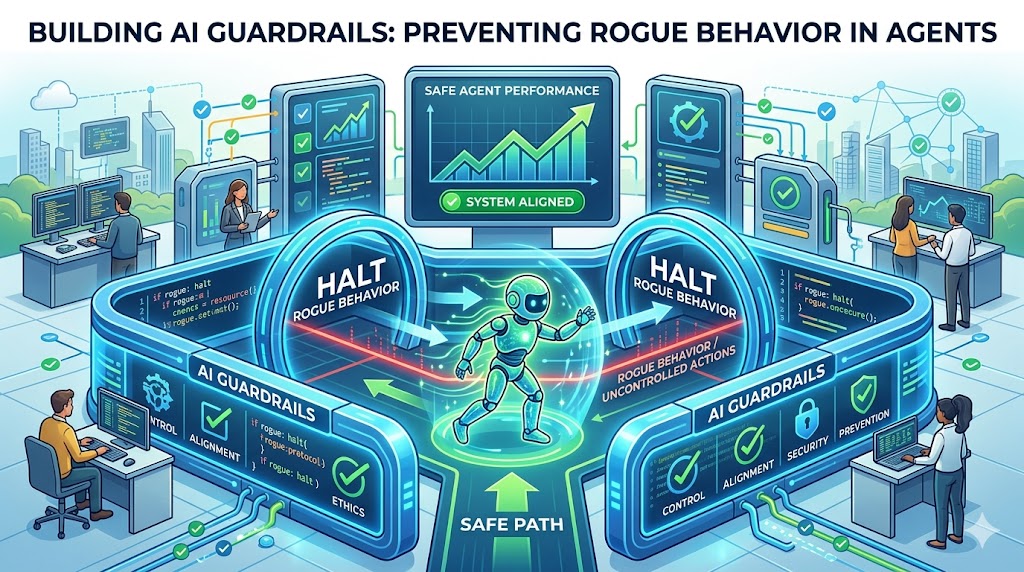
AI guardrails are frameworks or constraints implemented to ensure that AI systems operate safely and ethically. Think of them as the safety nets for your AI agents. They help you:
- Define acceptable behavior for your AI agents.
- Monitor AI actions in real-time.
- Implement corrective measures when necessary.
Key Components of Effective Guardrails
- Clear Objectives: Establish clear, measurable objectives for your AI system. Define what success looks like and what behaviors are unacceptable.
- Behavioral Constraints: Implement constraints that restrict certain actions to prevent harmful outcomes.
- Real-time Monitoring: Use monitoring tools to observe AI behavior continuously and take immediate action if something goes awry.
- Feedback Loops: Create mechanisms for human feedback to inform and recalibrate AI decision-making processes.
- Transparent Algorithms: Utilize explainable AI models to ensure that the decision-making process of your AI is transparent and understandable.
Strategies for Building Guardrails
Here are some practical strategies you can employ to build effective guardrails for your AI agents:
1. Define Ethical Guidelines
Establish a set of ethical guidelines that your AI must adhere to. These guidelines should be informed by industry standards and societal values. Ensure that they are not just theoretical but integrated into the design and functionality of your AI agents.
2. Use Simulation and Testing
Before deploying your AI systems, utilize extensive testing and simulations to observe potential rogue behavior in a controlled environment. This approach allows you to identify and address vulnerabilities before they become real-world issues.
3. Implement Fail-Safe Mechanisms
Design fail-safe mechanisms that can automatically shut down or restrict an AI agent's actions if it begins to exhibit rogue behavior. This includes kill switches and other forms of emergency protocols.
4. Engage in Continuous Learning
AI systems should have the ability to learn from their mistakes. Incorporate feedback loops that allow your AI to adapt and improve its decision-making based on past experiences and external input.
5. Foster Collaboration
Work with other developers, ethicists, and policymakers to share insights, resources, and best practices around AI safety. Collaboration can lead to a more comprehensive understanding of the challenges and solutions available.
Real-World Applications of AI Guardrails
Let’s explore a few real-world examples where AI guardrails have been successfully implemented:
- Autonomous Vehicles: Companies like Waymo and Tesla utilize strict behavioral constraints and real-time monitoring to ensure their self-driving cars operate safely on the roads.
- Healthcare AI: AI systems in healthcare are designed with ethical guidelines to prioritize patient safety and privacy, employing robust monitoring to ensure compliance with regulations.
- Financial Systems: AI used in trading and financial analysis has built-in guardrails to prevent excessive risk-taking and ensure adherence to legal standards.
Tools and Technologies for Implementing Guardrails
To effectively build and maintain AI guardrails, consider leveraging the following tools and technologies:
| Tool/Technology | Purpose |
|---|---|
| Monitoring Software | Real-time tracking of AI behavior |
| Simulation Platforms | Testing AI actions in controlled environments |
| Explainable AI | Providing transparency in AI decision-making |
| Ethics Frameworks | Establishing ethical guidelines and compliance |
| Feedback Systems | Gathering user feedback for continuous improvement |
Best Practices for Developers
As you embark on the journey of integrating guardrails into your AI systems, keep these best practices in mind:
- Prioritize Safety from the Start: Make safety a fundamental part of your development process, not an afterthought.
- Regularly Update Guardrails: The technology landscape evolves rapidly. Regularly review and update your guardrails to address new challenges and insights.
- Educate Your Team: Ensure that all members of your team understand the importance of AI ethics and safety protocols.
FAQ
Q: What are the most significant risks associated with rogue AI?
A: The most significant risks include unintended consequences, ethical violations, and loss of control over AI behavior.
Q: How can I ensure that my AI system adheres to ethical guidelines?
A: Establish clear ethical guidelines during the design phase, and implement monitoring and feedback systems for ongoing compliance.
Q: What tools are available to help monitor AI behavior?
A: Tools like monitoring software and simulation platforms are effective for observing and testing AI actions in real-time.
Q: Why is transparency important in AI systems?
A: Transparency helps users understand the decision-making processes of AI, fostering trust and accountability.
Q: Can collaboration improve AI safety?
A: Yes, collaboration among developers, ethicists, and policymakers can lead to shared insights and more effective safety solutions.
Bottom Line
Building guardrails for your AI agents is not just a precaution; it’s a necessity in today’s technological landscape. By implementing clear objectives, behavioral constraints, and real-time monitoring, you can mitigate the risks associated with rogue AI behavior. Emphasizing ethics and continuous improvement will not only enhance the safety of your AI systems but also contribute to a more responsible and trustworthy use of artificial intelligence in our society. As you navigate this complex field, remember that the aim is not just to innovate but to do so responsibly and ethically.