Apple's Bold Move: Poke, the First AI Agent on Messages for Business
Apple's introduction of Poke as the first AI agent on its Messages for Business platform marks a significant shift in customer communication. Explore the implications for developers and the future of customer service.
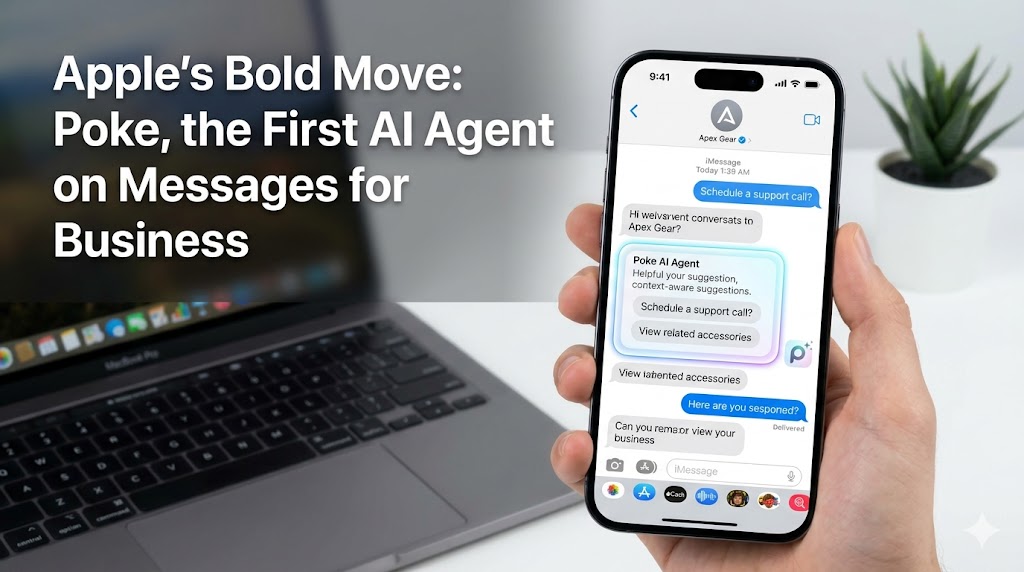
Introduction
In a landmark decision, Apple has approved Poke as the first AI agent to operate on its Messages for Business platform. This approval signifies a shift in how businesses will handle customer interactions, leveraging artificial intelligence to enhance efficiency and responsiveness. For developers and startup founders, this opens a new frontier in customer service and engagement.
What is Poke?
Poke is an AI agent designed to assist businesses in automating customer interactions through Apple's Messages for Business. By employing natural language processing and machine learning, Poke aims to provide timely responses to customer inquiries, improving overall user experience. Here are a few features that set Poke apart:
- Real-time Responses: Poke can handle multiple inquiries simultaneously, reducing wait times for customers.
- Learning Capabilities: The AI continually learns from interactions, improving its responses over time.
- Seamless Integration: Businesses can easily integrate Poke into their existing workflows without significant overhead.
Implications for Developers and Businesses
The approval of Poke marks a significant milestone for Apple and the broader tech ecosystem. Here are some implications for developers and startup founders:
Enhanced Customer Engagement
With Poke operating on the Messages for Business platform, businesses can engage customers in a more dynamic and responsive manner. This could lead to:
- Higher customer satisfaction due to quicker resolutions.
- Increased customer retention as users appreciate the efficiency of service.
A New Standard for Customer Service
Poke sets a precedent for AI integration into customer service platforms. This means:
- More businesses may look to integrate AI solutions, making them a must-have in competitive markets.
- Developers will need to focus on creating AI tools that can keep pace with evolving customer expectations.
Development Opportunities
For developers, Poke’s integration opens doors to:
- Creating specialized features for businesses that enhance Poke’s functionality.
- Building complementary tools that facilitate better communication between Poke and human agents.
Comparison: Traditional Customer Service vs. AI-Enhanced Customer Service
| Feature | Traditional Customer Service | AI-Enhanced Customer Service (Poke) |
|---|---|---|
| Response Time | Longer due to human factors | Instantaneous |
| Availability | Limited by human hours | 24/7 Availability |
| Scalability | Difficult to scale | Easily scalable |
| Learning Curve | Dependent on training | Continuously learns from interactions |
| Cost | Higher labor costs | Reduced operational costs |
Practical Takeaways for Developers
- Invest in AI Knowledge: As the landscape shifts, understanding AI and its applications will be crucial for developers.
- Explore Integrations: Look into how your existing tools can integrate with AI agents like Poke to enhance user experience.
- Focus on User Experience: Ensure that AI interactions are seamless and that users can easily transition to human agents when necessary.
Challenges Ahead
While Poke introduces exciting opportunities, it's essential to acknowledge potential challenges:
- Data Privacy: Businesses must navigate the complexities of user data protection while utilizing AI.
- Consumer Trust: Customers may be skeptical about interacting with AI, necessitating transparency and reliability in AI interactions.
- Technical Limitations: AI still has limitations, particularly in understanding nuanced queries, which underscores the need for human oversight.
FAQ
Q1: How does Poke improve customer engagement?
A1: Poke provides real-time responses and can handle multiple inquiries simultaneously, thereby increasing customer satisfaction and retention.
Q2: What are the potential challenges of using AI in customer service?
A2: Challenges include data privacy concerns, building consumer trust, and addressing the limitations of AI in understanding complex issues.
Q3: Can Poke integrate with existing business tools?
A3: Yes, Poke is designed for seamless integration into existing workflows, making it user-friendly for businesses.
Q4: Will AI replace human customer service agents?
A4: While AI can automate many tasks, human agents will still be needed for complex queries and providing personalized service.
Q5: How can developers leverage Poke's capabilities?
A5: Developers can build specialized features and tools that enhance Poke’s functionality, improving overall customer interaction.
Bottom Line
Apple's approval of Poke as the first AI agent on the Messages for Business platform heralds a new era in customer engagement. For developers, startups, and businesses, this is not just an opportunity to enhance customer service but also a call to innovate and adapt to changing technological landscapes. As AI continues to evolve, those who embrace these tools will likely lead the charge in redefining customer experiences.