AI's Impact on Jobs: Insights from OpenAI's Chris Lehane
OpenAI's Chris Lehane discusses the complex relationship between AI and employment, offering insights into how technology reshapes the workforce and societal structures.
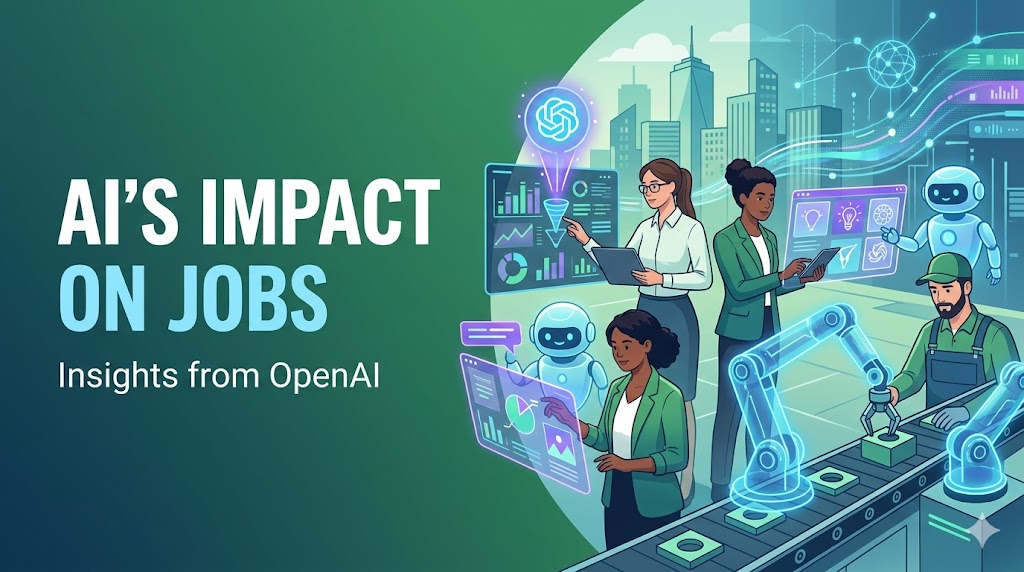
Introduction
The rise of artificial intelligence (AI) has sparked intense discussions about its potential impact on jobs and society. Recently, Chris Lehane, OpenAI's Chief Global Affairs Officer, provided key insights into these concerns during an interview with CNBC. As AI technologies continue to evolve, understanding their implications for the workforce becomes crucial for developers, startup founders, and indie hackers alike.
Understanding AI's Role in Employment
AI isn't just a buzzword; it's a transformative force in many sectors. Lehane emphasizes that while AI will inevitably change the landscape of work, it does not necessarily equate to job loss. Instead, he suggests that AI will reshape existing roles and create new ones, presenting both challenges and opportunities.
Key Points from Chris Lehane
- Job Transformation Over Job Loss: Lehane highlights that AI will likely lead to the transformation of jobs rather than outright elimination. Roles that rely heavily on repetitive tasks may see automation, while those requiring creativity and emotional intelligence will become more valuable.
- New Opportunities: As certain jobs evolve, new opportunities will emerge in the AI sector itself. This includes roles in AI ethics, data analysis, and machine learning.
- Upskilling and Reskilling: For workers to thrive in an AI-driven economy, upskilling and reskilling will be essential. Companies and educational institutions must collaborate to provide training that aligns with new job requirements.
The Dual-Edged Sword of AI
AI’s impact on jobs can be viewed as a double-edged sword. On one side, there are significant benefits, including increased efficiency and the ability to handle complex tasks. On the other, there are valid concerns about job displacement and inequality.
Potential Benefits of AI in the Workplace
- Increased Efficiency: AI can automate mundane tasks, allowing employees to focus on higher-value work.
- Enhanced Decision-Making: Machine learning algorithms can analyze vast amounts of data quickly, enabling better-informed decision-making.
- Customization and Personalization: Businesses can leverage AI to tailor their offerings to individual customer preferences, enhancing user experience.
Challenges and Concerns
- Job Displacement: While AI may create new jobs, there is a real fear that many workers will be left behind, especially those in low-skill positions.
- Inequality: As AI technologies continue to advance, there is a risk that the benefits will be concentrated among those who can adapt quickly, leaving others at a disadvantage.
- Ethical Considerations: The ethical dimensions of AI deployment must be carefully considered, particularly in terms of bias and fairness.
Practical Insights for Developers and Founders
For indie hackers and startup founders looking to navigate this evolving landscape, several practical insights can be gleaned from Lehane's observations:
- Embrace Change: Accept that AI is a tool for innovation. Rather than resisting it, find ways to incorporate AI into your business model.
- Invest in Learning: Prioritize continuous learning and development for yourself and your team. This can help mitigate the risks posed by rapid technological changes.
- Focus on Human-Centric Roles: As the demand for roles requiring human empathy and creativity grows, consider how your products or services can enhance these aspects.
Table: AI's Impact on Jobs
| Aspect | Positive Outcomes | Challenges |
|---|---|---|
| Job Creation | New roles in AI ethics, data science | Displacement in low-skill jobs |
| Efficiency | Increased productivity | Potential job loss |
| Decision-Making | Improved data analysis and insights | Over-reliance on algorithms |
| Customization | Personalized user experiences | Risk of bias in AI systems |
| Upskilling | Enhanced skill sets for workers | Need for ongoing training |
Conclusion
Chris Lehane's insights into the impact of AI on jobs provide a balanced perspective on a complex issue. While AI presents undeniable challenges, it also offers a wealth of opportunities—especially for those willing to adapt. As we move forward, the onus lies on companies, educational institutions, and policymakers to ensure that the workforce is prepared for the changes ahead. Embracing a forward-thinking approach will not only help individuals thrive but also foster a more equitable and innovative society.
FAQ
1. Will AI really replace many jobs?
While AI may automate certain tasks, it is more likely to transform jobs rather than eliminate them entirely.
2. What sectors will see the most change due to AI?
Sectors that rely on repetitive tasks, such as manufacturing and administrative roles, are likely to experience the most significant changes.
3. How can businesses prepare for the AI revolution?
Businesses should focus on upskilling their workforce and integrating AI tools that enhance productivity and decision-making.
4. What new jobs are likely to emerge due to AI?
New roles in AI ethics, data analysis, and machine learning are expected to grow as AI technologies advance.
5. How can individuals stay relevant in an AI-driven job market?
Continuous learning and adaptability are key. Individuals should seek training programs that align with emerging job requirements.