AI Startups Redefining Work Routing Across Models
Discover how a pioneering AI startup is transforming the way AI agents route work across various models, offering new efficiencies for developers and startups.
Introduction
In the rapidly evolving landscape of artificial intelligence, startups are pushing the boundaries of what's possible. One such startup is making waves by changing how AI agents route work across various models. This innovation is not just reshaping the development of AI systems but also offering significant advantages for developers and startup founders navigating the complexities of AI deployment.
Understanding Work Routing in AI
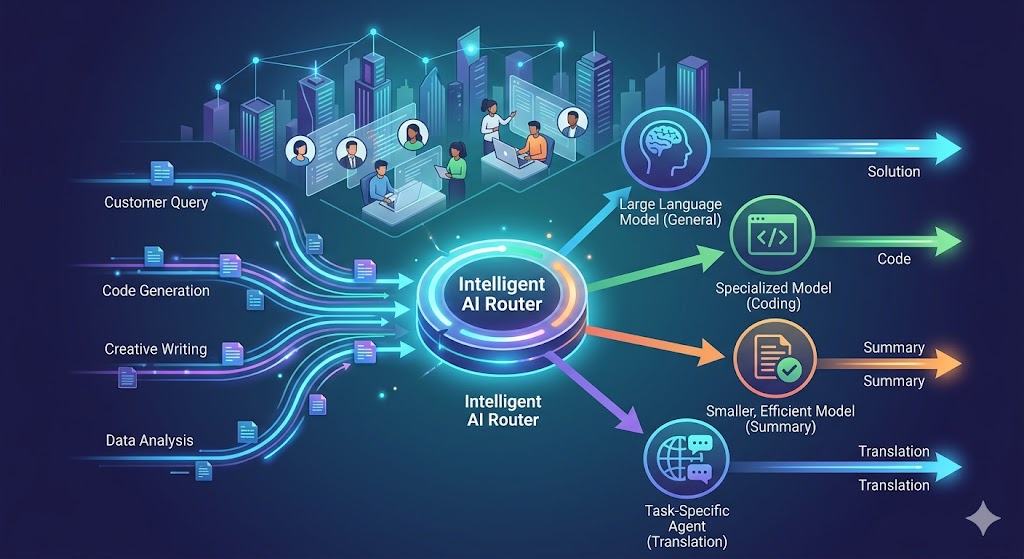
Work routing in AI involves the intelligent distribution of tasks among different AI models to ensure efficiency and accuracy. Traditionally, this process has been somewhat rigid, often relying on predefined pathways that do not adapt well to changing conditions or varying workloads. The new approach being taken by this startup allows for dynamic routing based on real-time data and model performance, which can lead to:
- Increased Efficiency: By optimizing the pathways through which tasks are routed, the AI can complete jobs faster and with fewer resources.
- Enhanced Flexibility: This system can adapt to the changing demands of tasks, allowing for a more agile response to user needs.
- Improved Accuracy: By leveraging the strengths of multiple models, the AI can produce more reliable results, reducing error rates.
The Role of AI Agents in Work Routing
AI agents are the backbone of this routing process. They act as intermediaries, assessing which model is best suited for a particular task based on various factors such as:
- Model Performance: How well a model has performed on similar tasks in the past.
- Resource Availability: The computational power or data needed to complete a task.
- Real-Time Analytics: Immediate feedback from ongoing operations to guide decisions.
Benefits of Advanced Work Routing
The implications of this new system are vast. For developers, it means they can:
- Reduce Development Time: By automating the routing process, developers can focus on more strategic tasks rather than micromanaging workflows.
- Lower Operational Costs: Efficient routing can lead to lower resource consumption, which translates to cost savings.
- Scale Effectively: As projects grow, the ability to dynamically route tasks allows for smoother scaling without a proportional increase in overhead.
Practical Applications for Startups
For startups, especially those in the AI space, implementing such work routing systems can be transformative. Here’s how:
Case Study: A Fictional AI Startup
Imagine an AI startup, "SmartRoute," that specializes in natural language processing (NLP). Initially, they relied on a single model to handle customer inquiries, resulting in slow response times and customer dissatisfaction. By adopting the new work routing strategy:
- SmartRoute can route inquiries based on complexity to different models specialized in various aspects of NLP.
- Simple queries are handled by a lightweight model, while complex inquiries are sent to a more sophisticated one.
This change leads to:
- Faster Response Times: Customers receive answers more quickly, enhancing satisfaction.
- Higher Conversion Rates: With improved customer interactions, the startup sees an uptick in user engagement and conversions.
The Technology Behind Dynamic Routing
The technology enabling this innovation typically involves:
- Machine Learning Algorithms: These algorithms analyze past performance data to predict the best routing pathways.
- APIs for Integration: Seamless integration with existing models and systems is crucial for making this work.
- Data Analytics Tools: Real-time analytics provide the necessary insights for decision-making.
Comparison of Traditional vs. Dynamic Routing
| Feature | Traditional Routing | Dynamic Routing |
|---|---|---|
| Adaptability | Low | High |
| Efficiency | Moderate | High |
| Resource Utilization | Rigid | Flexible |
| Speed of Task Completion | Slower | Faster |
| Cost-Effectiveness | Moderate | High |
Challenges and Considerations
While the benefits of dynamic work routing are clear, there are also challenges:
- Implementation Complexity: Integrating new routing systems can be technically demanding.
- Data Privacy Concerns: Handling data across multiple models requires stringent privacy controls.
- Reliability of Models: The effectiveness of dynamic routing depends on the performance of the individual models involved.
Future Outlook
As AI technology continues to evolve, the methods for routing work across models will likely become even more sophisticated. The trend towards automation and AI-driven decisions will undoubtedly shape the future of development practices, leading to:
- Increased Collaboration Among Models: Future systems may see even greater interactivity and cooperation between various AI models.
- Broader Adoption Across Industries: Industries beyond tech will begin to see the benefits of advanced routing systems, leading to widespread changes in operational practices.
FAQ
What is work routing in AI?
Work routing in AI refers to the process of distributing tasks among different AI models based on their capabilities and performance to optimize efficiency and accuracy.
How can startups benefit from dynamic work routing?
Startups can enjoy reduced development times, lower operational costs, and improved scalability by implementing dynamic routing systems.
What technologies enable dynamic work routing?
Dynamic work routing is enabled by machine learning algorithms, APIs for integration, and real-time data analytics tools.
Are there challenges in implementing dynamic routing?
Yes, challenges include implementation complexity, data privacy concerns, and the reliability of individual models.
How does this impact the future of AI development?
The trend towards dynamic routing is likely to lead to more efficient AI systems, better collaboration among models, and broader adoption across various industries.
Bottom Line
The evolution of AI routing technology presents significant opportunities for developers and startups alike. By embracing advanced work routing strategies, organizations can enhance efficiency, reduce costs, and improve overall performance. As new innovations emerge, staying informed and adaptable will be key to leveraging these advancements in the ever-competitive tech landscape.