Exploring AI Security: My $1,500 Experiment with LLMs and Vulnerable Apps
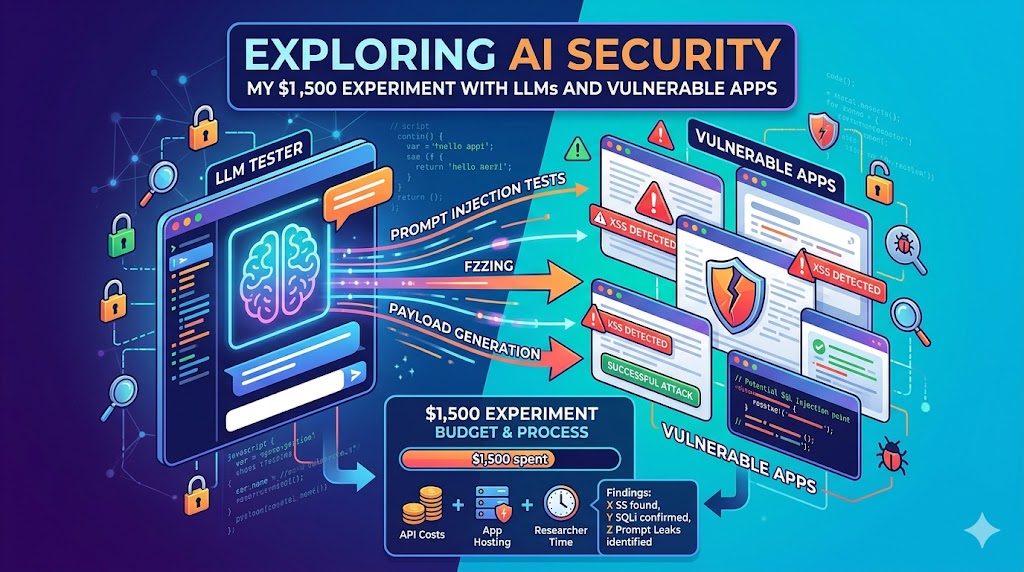
In a groundbreaking experiment, I invested $1,500 to test if LLMs could exploit vulnerabilities in my app. Here's what I discovered and its implications for developers.
The Intersection of AI and Cybersecurity
In an era where artificial intelligence is becoming increasingly prevalent, the implications for cybersecurity are profound. Recently, I embarked on an experiment that cost me $1,500, aiming to determine whether large language models (LLMs) could effectively exploit vulnerabilities in a purposely designed app. This endeavor was not just about the monetary investment but about understanding the capabilities and limitations of AI in the realm of security.
Why Build a Vulnerable App?
The decision to create a vulnerable app stemmed from a desire to explore the vulnerabilities that developers often overlook. By designing an app with known weaknesses, I aimed to provide a controlled environment where LLMs could be tested. This experiment could reveal:
- The effectiveness of AI in identifying vulnerabilities.
- How LLMs could potentially be used for malicious purposes.
- The insights developers can gain to enhance app security.
Setting the Stage: The App Design
The app I developed contained several common vulnerabilities that often plague software development, including:
- SQL Injection: A method where attackers can execute arbitrary SQL code through input fields.
- Cross-Site Scripting (XSS): Allowing attackers to inject scripts into web pages viewed by users.
- Insecure Direct Object References: Where unauthorized users can access restricted data.
By incorporating these weaknesses, I created a sandbox for the LLMs to play in, making it possible to observe their hacking capabilities in a safe manner.
The Experiment: Testing the Limits of LLMs
With the vulnerable app ready, I began experimenting with various LLMs, focusing on their ability to probe for weaknesses and exploit them. Here’s a breakdown of the process:
- Selection of LLMs: I chose several popular LLMs known for their conversational capabilities and language understanding.
- Prompts and Queries: I crafted specific prompts designed to simulate hacker behavior, asking the models to identify vulnerabilities and suggest exploit methods.
- Budget Allocation: The $1,500 investment was primarily allocated towards computational resources and access to premium LLM APIs.
Insights Gained from the Experiment
After extensive testing, the findings were both intriguing and alarming. Here are some key takeaways:
1. LLMs Can Identify Vulnerabilities
The models demonstrated a surprising ability to recognize common vulnerabilities when prompted correctly. For instance:
- SQL Injection: LLMs were able to generate SQL commands that could potentially exploit the app's input fields.
- XSS Exploits: They suggested payloads that could inject malicious scripts into user sessions.
2. Limitations of AI
While LLMs showed promise, there were notable limitations:
- Contextual Understanding: The models occasionally struggled with understanding the broader context, leading to incomplete exploitation strategies.
- Static Analysis: They relied heavily on predefined patterns rather than adapting to new or innovative security measures.
3. Potential Misuse of AI
The experiment raised ethical concerns. The ease with which LLMs could suggest exploit methods highlights the potential for malicious actors to misuse AI tools. Developers must be vigilant about how these technologies can be weaponized.
Implications for Developers and Founders
As developers and startup founders, the lessons learned from this experiment can guide better security practices:
- Incorporate AI in Security Tests: Consider using LLMs as part of your security assessments to identify vulnerabilities in your applications.
- Stay Informed: Keep abreast of developments in AI and cybersecurity to understand how they intersect.
- Strengthen Defensive Measures: Use insights from LLM suggestions to fortify your app against common vulnerabilities.
Comparison Table: LLMs vs. Traditional Testing Methods
| Feature | LLMs | Traditional Testing Methods |
|---|---|---|
| Speed | Fast | Slower |
| Cost | Variable (API fees) | Generally higher (manual labor) |
| Adaptability | Moderate | High (human intuition) |
| Contextual Awareness | Limited | High |
| Ease of Use | User-friendly | Requires specialized skills |
FAQ
Q: Can LLMs replace traditional security testing methods?
A: No, while LLMs can identify vulnerabilities quickly, they lack the contextual understanding of human testers. They should complement, not replace, traditional methods.
Q: What are the ethical implications of using LLMs in security testing?
A: There are concerns about misuse. Developers should employ LLMs responsibly and focus on enhancing security rather than exploiting vulnerabilities.
Q: How can I secure my app against AI-driven attacks?
A: Regularly update your security measures, conduct thorough testing, and stay informed about emerging threats in AI and cybersecurity.
Q: Are there specific LLMs better suited for security testing?
A: While many LLMs can assist, look for those with strong language capabilities and contextual understanding.
Q: What’s the best way to learn about app security?
A: Engage with communities, take courses, and practice on platforms that simulate vulnerability testing.
Bottom Line
The $1,500 investment in testing LLMs against a vulnerable app has yielded valuable insights into the capabilities and limitations of AI in cybersecurity. While LLMs can expedite the identification of vulnerabilities, they should be viewed as tools to enhance existing security measures rather than replacements for human intuition and expertise. As the landscape of app development continues to evolve, integrating AI responsibly will be crucial for safeguarding our digital environments.