AI Job Apocalypse: Sam Altman and Dario Amodei Reassess Predictions
Sam Altman and Dario Amodei are revisiting their previous predictions about AI leading to job losses, focusing on adaptability and new opportunities instead.
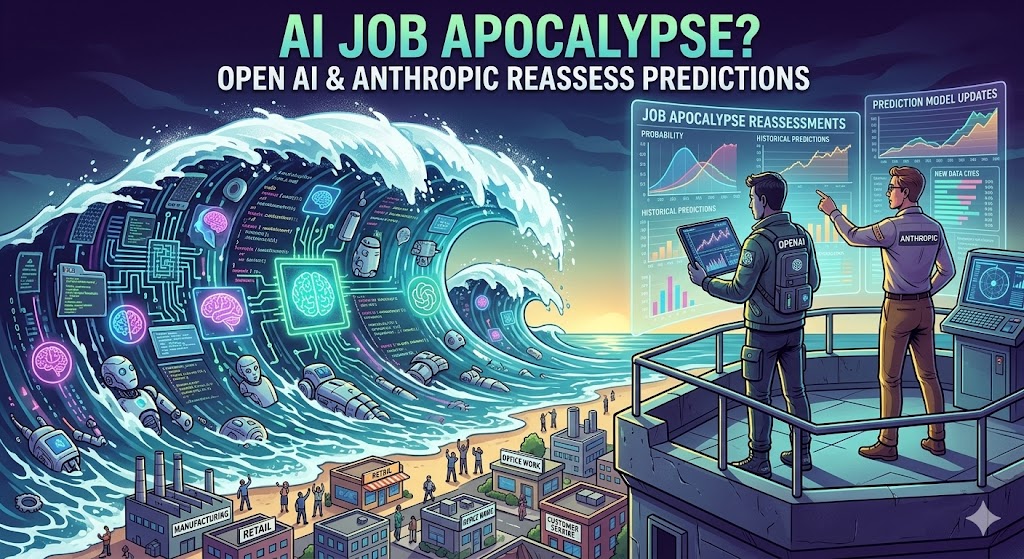
The Changing Narrative on AI and Jobs
In the past few years, discussions surrounding artificial intelligence (AI) have ranged from excitement about its potential to stark warnings about its implications for the job market. Among the most vocal proponents of the latter narrative were Sam Altman, CEO of OpenAI, and Dario Amodei, co-founder of Anthropic. However, recent statements from both individuals indicate a significant shift in their stance regarding AI's impact on employment.
Revisiting Predictions: From Apocalypse to Adaptation
Altman and Amodei have both acknowledged that their earlier predictions regarding the widespread job losses due to AI advancements may have been overly pessimistic. This change of heart is not merely a reaction to evolving public sentiment but reflects a deeper understanding of how AI is likely to integrate into the workforce.
- Sam Altman has emphasized that rather than wholesale job losses, the integration of AI technology into various sectors will lead to job transformations. He argues that while some positions may be automated, new roles that require human oversight and creativity will emerge.
- Dario Amodei echoes this sentiment, suggesting that AI will act more as a collaborator than a replacement, augmenting human capabilities rather than rendering them obsolete.
The Context of Their Predictions
The initial fear surrounding AI's impact on jobs stemmed from several factors:
- Rapid Advancements: The pace at which AI technology has evolved, especially with deep learning and natural language processing, has been staggering. Many feared that machines would soon surpass human capabilities across various job functions.
- Media Amplification: Media outlets often highlighted dystopian narratives, feeding into public anxiety about job security.
- Cultural Shifts: The workforce has historically had to adapt to technological changes, but the fear of an AI-driven future felt uniquely different.
Shifting Focus: Opportunities Over Threats
In reassessing their predictions, Altman and Amodei are steering the conversation towards a more optimistic view of the future. This perspective hinges on several key points:
- Human-AI Collaboration: AI is increasingly being viewed as a tool that enhances human capabilities. For developers and startup founders, this means leveraging AI to streamline processes and improve productivity rather than fearing job displacement.
- Emerging Roles: As AI takes over routine tasks, new roles in AI oversight, ethics, and integration are likely to surface. For instance, positions focused on AI training and human-AI interaction design may become more prevalent.
- Reskilling and Education: The emphasis on adaptability highlights the need for ongoing education and reskilling. Workers will need to engage in lifelong learning to stay relevant in an evolving job landscape.
- Diverse Impact Across Industries: Different sectors will experience varied impacts from AI advancements. For example, while manufacturing may see significant automation, creative fields like design and marketing may benefit from AI-enhanced tools that augment human creativity.
The Practical Takeaways for Developers and Founders
For those in the tech industry, particularly indie hackers and startup founders, this reassessment offers several actionable insights:
- Embrace AI as an Ally: Instead of viewing AI as a competitor, consider how it can complement your skills and enhance your product offerings. Tools like ScreenMint can automate tedious tasks like generating App Store screenshots or ASO metadata, allowing you to focus on innovation.
- Invest in Learning: Encourage a culture of continuous learning within your team. This might include workshops on AI technologies or partnerships with educational platforms to provide upskilling opportunities.
- Monitor Industry Trends: Stay informed about how AI is evolving in your field. Understanding where AI can provide an edge will be crucial for maintaining a competitive advantage.
Table: Predictions vs. Reality
| Aspect | Initial Predictions | Current Perspectives |
|---|---|---|
| Job Loss | Widespread job displacement | Transformation of roles |
| AI's Role | Replacement of human jobs | Collaboration and augmentation |
| Industry Impact | Uniform across sectors | Varied, with unique challenges |
| Future Opportunities | Limited job creation | New roles in AI oversight and ethics |
FAQ
Q1: Are jobs really at risk due to AI?
A1: While some jobs may be automated, many experts now believe that AI will create new roles and transform existing ones rather than eliminate them entirely.
Q2: What steps can I take to prepare for the AI-driven job market?
A2: Focus on reskilling and continuous learning. Embrace new technologies and consider how AI can enhance your work rather than replace it.
Q3: How can startups leverage AI effectively?
A3: Startups can integrate AI tools to automate routine tasks, improve product offerings, and enhance customer experiences while allowing teams to focus on strategic initiatives.
Bottom Line
The initial fears surrounding AI's impact on jobs, championed by influential figures like Sam Altman and Dario Amodei, are being reassessed in light of new perspectives on adaptation and collaboration. As developers and startup founders, understanding this evolving landscape is vital for navigating the future of work. By embracing AI as a partner, investing in reskilling, and focusing on human-AI collaboration, you can position yourself for success in an increasingly automated world.