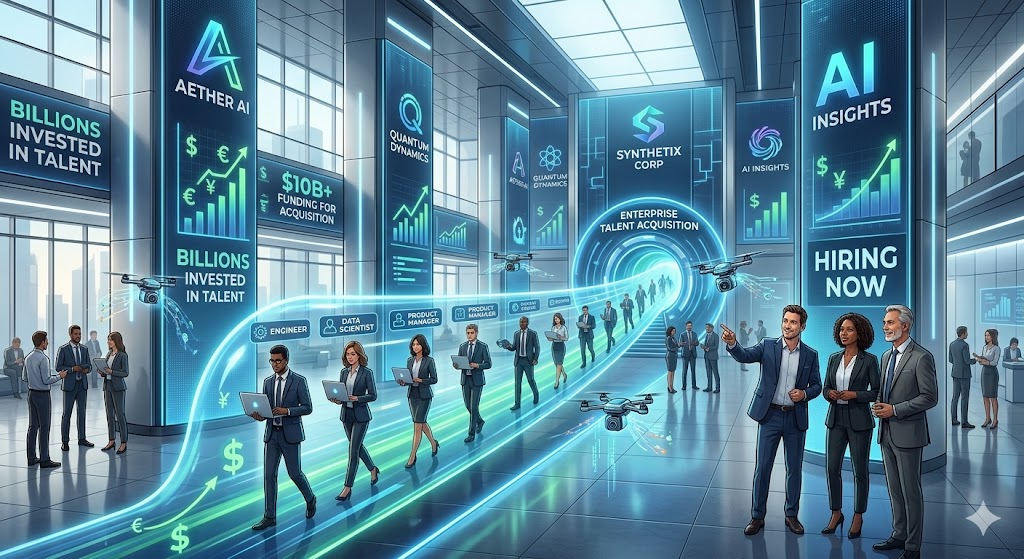
AI Giants Invest Billions in Enterprise Talent Acquisition
AI giants are pouring billions into acquiring top talent, reshaping the enterprise landscape. Discover the implications for startups and indie hackers.
Introduction
In the rapidly evolving world of technology, artificial intelligence (AI) stands out as a transformative force. As AI giants such as Google, Microsoft, and Amazon continue to invest billions into their platforms, a significant focus is shifting toward acquiring top talent. This article delves into the implications of this trend, especially for startups and indie developers navigating a complex landscape.
The Talent Acquisition Landscape
The demand for AI talent is at an all-time high. Companies are competing fiercely to secure the best minds, leading to astronomical salaries and benefits packages. Here’s what the current landscape looks like:
- Increased Salaries: AI professionals are now commanding salaries that often exceed $200,000 per year, with top-tier talents able to negotiate even higher.
- Comprehensive Benefits: Companies are offering remote work options, generous vacation policies, and extensive professional development opportunities.
- Diverse Opportunities: From AI researchers to machine learning engineers, the range of roles has expanded significantly, catering to different skill sets and interests.
Why the Focus on Talent?
1. Innovation Drive
AI giants recognize that innovation is driven by talent. The more skilled professionals they can attract, the better positioned they are to produce cutting-edge solutions and maintain a competitive edge.
2. Complexity of AI
AI technologies are complex and require specialized knowledge. This includes expertise in deep learning, natural language processing, and data analytics. As applications become more sophisticated, the need for highly skilled professionals intensifies.
3. Competition
The tech landscape is increasingly competitive. Major players are not just competing with each other; they are also vying against agile startups that bring fresh perspectives and innovative ideas to the table. To stay ahead, they must secure the best talent.
Implications for Startups and Indie Hackers
While the focus on talent acquisition may seem like a boon for the industry, it presents unique challenges for startups and indie hackers. Here are some key takeaways:
Challenges:
- Talent Drain: Startups often struggle to compete with the lucrative offers from tech giants, leading to a talent drain that can stifle innovation.
- Increased Expectations: The bar for skilled professionals is rising. Startups may find it harder to attract talent without offering competitive salaries and benefits.
- Collaboration Difficulties: As large companies hoard talent, smaller entities may find it challenging to collaborate with the best minds in the industry.
Opportunities:
- Niche Focus: Startups can thrive by focusing on niche markets where demand for specialized skills exists but competition is lower.
- Remote Workforce: The shift to remote work allows startups to tap into a global talent pool, potentially finding skilled professionals at a lower cost.
- Innovation Through Agility: Startups are often more agile than larger organizations, allowing them to pivot quickly and innovate without the bureaucratic red tape.
Key Strategies for Startups
To navigate this competitive talent landscape, startups and indie hackers can adopt several strategies:
- Emphasize Company Culture: Building an attractive company culture can help attract talent. Highlighting flexibility, work-life balance, and a collaborative environment can make a significant difference.
- Leverage AI Tools: Utilizing AI-driven tools like ScreenMint for app development and ASO can help streamline processes and appeal to tech-savvy talent who value efficiency.
- Networking and Community Engagement: Engaging with local tech communities, attending events, and contributing to open-source projects can help startups build relationships with potential hires.
- Offer Unique Incentives: Consider unique incentives that may appeal to potential hires, such as equity in the company, profit-sharing, or opportunities for rapid career advancement.
The Future of AI Talent Acquisition
As AI continues to evolve, the focus on talent acquisition is unlikely to wane. The industry must adapt to changing dynamics, including the increasing integration of AI tools in everyday operations. Companies that succeed in attracting and retaining top talent will be those that foster innovation and prioritize employee satisfaction.
Comparison Table: Talent Acquisition Strategies
| Strategy | Benefits | Challenges |
|---|---|---|
| Emphasize Company Culture | Attracts talent, improves retention | Requires ongoing effort |
| Leverage AI Tools | Increases efficiency | May require upfront investment |
| Networking & Engagement | Builds relationships | Time-consuming |
| Unique Incentives | Attracts diverse talent | May impact short-term finances |
FAQ
Q1: Why are AI giants investing so heavily in talent acquisition?
A1: The competition to innovate and maintain a competitive edge drives AI giants to secure top talent, as skilled professionals are essential for developing advanced technologies.
Q2: How can startups compete for talent against large companies?
A2: Startups can focus on building a strong company culture, leveraging AI tools, engaging with communities, and offering unique incentives to attract talent.
Q3: What are some unique incentives startups can offer to attract talent?
A3: Unique incentives may include equity in the company, profit-sharing, flexible work hours, or opportunities for career advancement.
Q4: How does remote work affect talent acquisition?
A4: Remote work allows startups to access a global talent pool, potentially reducing costs and increasing the diversity of candidates.
Q5: What role does company culture play in attracting talent?
A5: A positive company culture can significantly enhance a startup's attractiveness, making it easier to recruit and retain top talent by emphasizing flexibility and collaboration.
Bottom Line
The investment by AI giants into acquiring talent reflects not only the increasing complexity of technology but also the competitive nature of the industry. For startups and indie hackers, understanding these dynamics is crucial. By adopting strategic approaches and leveraging unique advantages, smaller companies can carve out their own space in the tech ecosystem. As the landscape shifts, those who can navigate these changes effectively will position themselves for success in the AI-driven future.