Understanding AI Agent Permission Fatigue: A 60-Second Game
Explore the phenomenon of AI agent permission fatigue through a unique 60-second game that challenges perceptions and highlights developers' considerations.
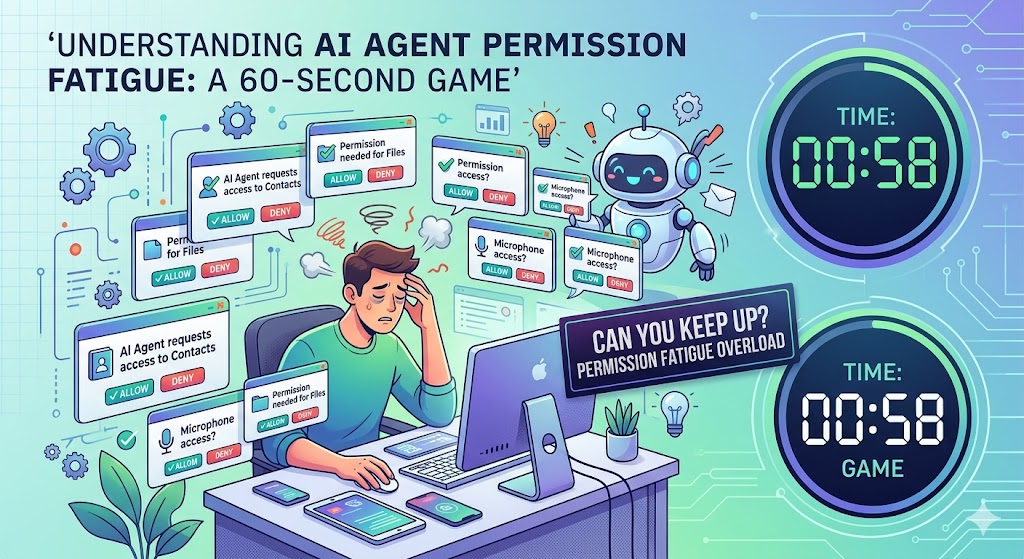
Introduction
In today's rapidly evolving landscape of artificial intelligence, developers and users alike are confronted with an intriguing yet challenging phenomenon known as permission fatigue. With the rise of AI agents that require various permissions to operate effectively, a balance must be struck between functionality and user experience. Recently, a simple yet thought-provoking game titled Show HN: Continue? Y/N surfaced on Hacker News, sparking discussions about this very issue. In this article, we will delve into the concept of AI agent permission fatigue, explore the implications for developers, and examine how this game serves as a compelling illustration of the challenges we face.
What is Permission Fatigue?
Permission fatigue refers to the diminishing willingness of users to grant permissions to applications or AI agents after repeated requests. As users are bombarded with prompts asking for access to their data, location, or other sensitive information, their initial enthusiasm can quickly turn into reluctance or frustration. This phenomenon can lead to several outcomes:
- User Resistance: Users may start denying permissions, limiting the functionality of the AI agent.
- Decreased Engagement: Continuous prompts can drive users away, leading to reduced app usage.
- Trust Issues: Over time, users may develop skepticism towards applications that request extensive permissions.
Understanding permission fatigue is crucial for developers aiming to create AI solutions that are both effective and user-friendly.
The Game: Show HN: Continue? Y/N
The game designed by ScaleX, available at llmgame.scalex.dev, presents a unique opportunity to engage with the concept of permission fatigue in a playful manner. In just 60 seconds, players are faced with a series of decisions that mirror real-world scenarios where AI agents must request permissions to function optimally.
Gameplay Overview
- Objective: Players must decide whether to grant or deny permissions to an AI agent as it navigates through various tasks.
- Time Constraint: With only 60 seconds to make decisions, players experience a sense of urgency that mirrors the real-life pressures of managing multiple app permissions.
- Consequences: Each decision impacts the agent's abilities and the overall outcome of the game, emphasizing the trade-offs associated with granting permissions.
Key Takeaways from the Game
- Highlighting User Experience: The game effectively demonstrates how constant permission requests can lead to fatigue, emphasizing the importance of a streamlined user experience.
- Encouraging Reflection: Players are prompted to consider the implications of their choices, fostering a deeper understanding of the balance between control and convenience.
- Insight for Developers: By simulating the decision-making process, the game provides developers with valuable insights into user behavior and preferences regarding permissions.
Implications for Developers
As AI technologies continue to advance, developers must navigate the complexities of user permissions thoughtfully. Here are several strategies for mitigating permission fatigue:
1. Prioritize Necessary Permissions
- Only ask for permissions that are essential for the core functionality of the application. This will help maintain user trust and reduce friction.
2. Implement Contextual Requests
- Instead of bombarding users with all permission requests upfront, consider contextual prompts that explain why a specific permission is needed at that moment.
3. Educate Users
- Provide clear information about how permissions enhance the user experience. Transparency can alleviate concerns and build trust.
4. Streamline the Permission Process
- Aim for a seamless permission-granting experience. Avoid repetitive prompts and consider bundling related permissions to minimize disruption.
5. Solicit Feedback
- Actively seek user feedback regarding permissions. This can provide insights that help refine the permission process and improve user satisfaction.
Conclusion
The emergence of AI agent permission fatigue presents a multifaceted challenge for developers and users alike. The Show HN: Continue? Y/N game serves as a playful yet insightful tool for exploring this concept, highlighting the need for a thoughtful approach to permissions in AI applications. As developers, embracing user-centric design principles and fostering transparency can pave the way for more engaging and trustworthy AI interactions.
FAQ
What is permission fatigue?
Permission fatigue is the reluctance of users to grant permissions due to repeated requests from applications or AI agents, leading to user resistance and decreased engagement.
How does the game illustrate permission fatigue?
The game presents players with rapid decision-making scenarios regarding permissions, simulating real-world experiences and highlighting the trade-offs involved in granting permissions.
What strategies can developers use to mitigate permission fatigue?
Developers can prioritize necessary permissions, implement contextual requests, educate users, streamline the permission process, and solicit feedback to improve the user experience.
Why is understanding permission fatigue important?
Understanding permission fatigue is crucial for developers to create user-friendly applications that build trust and maintain user engagement without overwhelming them with requests.
How can I play the game?
The game is accessible online at llmgame.scalex.dev and can be completed in just 60 seconds, providing a quick and engaging experience to reflect on permission fatigue.